Thursday, February 12, 2015

Media's Dirty Tricks: Slanting a Story -- and Politicizing It -- with a Headline


Yahoo! Finance ran a CNNMoney story today with the headline "You'll pay a lot more to see the doctor with Obamacare than with job-based health insurance." Straight news, right? Wrong. Look at the lede (opening paragraph):
Obamacare enrollees have to shell out a lot more to see the doctor or get medications than their peers with job-based health insurance.
Sounds pretty bad, huh? Well, look at the next five paragraphs:
Deductibles, co-payments, and drug payments are higher under the average Obamacare silver-level plans -- the most popular -- than employer policies, according to a CNNMoney comparison of reports by Kaiser Family Foundation and Health Research & Education Trust. The reports looked at policies offered on the exchanges for 2015 and those enrolled in employer plans in 2014.
To be sure, having Obamacare coverage is often better than being uninsured, especially if you rack up big bills through a major illness or accident.
Obamacare also offers cost-sharing subsidies for low-income Americans, which reduces their deductibles and co-pays.
And there is wide variety in out-of-pocket costs in both Obamacare and job-based plans. For many in the individual market, Obamacare eliminated sky-high deductibles of $10,000 or more that were common before health reform.
"The cost sharing is higher on the exchange than in the employer market, but it's lower than it was before," said Gary Claxton, director of the Health Care Marketplace Project, at the Kaiser Family Foundation.
I put the line in bold that should have been the lede. And the headline should be: "Obamacare brings down costs for people without job-based insurance." Why isn't it? The reason is simple. Reporters generally don't write their headlines, editors do. Do think editors might try to slant a story for political ends, hoping the headline does the disinformational damage for people who scan the news rather than read in depth? Do you think?

Of course, no worse example exists than Fox News. The entire operation is built to slant the news to the far right. Good news comes out about how many new jobs there are. Fox News doesn't like good news for Obama. So they go to work:


(Thanks, Media Matters.)

Of course the dirty trick here is that it's all good news, even the uptick to 5.7%, because it means more people are back in the labor force, more confident they'll find a job. That, naturally, is meaningless to Fox News. Thus host Steve Doocy says, "So the headline is unemployment rate ticks up to 5.7." Asshole. Same goes to the editor at CNNMoney.

Wednesday, February 11, 2015

Thanks Goodness Fox News Isn't into Vindictive, Explosive Nonsense

Fox's Dana Perino: so nonpartisan you wouldn't know she worked for Bush.

As best I can recall, it was Digby at Hullabalo who pointed out that you had to watch Fox News 24 hours a day to get the "Fox effect" that must transpire in the hearts and minds of those who are glued to the Fox News screen for all things newsy. I only get these tidbits in small doses from the various blogs and media watchman who pass them on. Here, then, are a few from the past day or two.


Watch as much of this as you want. The punchline ends at 3:43.


The next video has to be seen to be believed. Who knew -- Roger Ailes? -- would ever happen on Fox News.


In all fairness, Hannity and Rivera, were gobsmacked by the guest's remarks. Being the seasoned pros that they are, they didn't have the faintest idea what she was about the say. You go, Fox!

Let's finish with some serious Dr. Ben Carson and Tucker Carlson:


Monday, February 9, 2015

Clown Car Rundown, Person the Second: Chris Christie Is a Dead Candidate Walking

Bridgegate: If only that were his only problem...

Note. My complaint about Chris Christie's candidacy is that it's built on nothing but bluster. If he can't balance a budget except by stealing from public employee funds, and can't bring Atlantic City back from the grave, or run the Port Authority through his cronies without getting investigated from every angle, or, for god's sake, keep his own state's residents from turning on him, what's the rationale for his becoming president? I'll be damned if I know. So, read on...

The biggest problem Chris Christie has is that he's quasi-viable, for now. So he'll run on and on, while the dogs of his past nip at his ankles. What's his biggest problem? The people of New Jersey don't like -- or trust -- him anymore. Here's what an NJ rag thinks of him:
Yes, our governor is melting into a puddle of goo as his glorious power seeps away. His friends and enemies alike are watching, astonished at the speed of the decline.
"It's about the worst 30 days I've seen of any candidate," says Ed Rollins, a former aide to Ronald Reagan and a GOP campaign strategist. "In his first couple of years, he had a lot of promise. But people who a year ago thought he was viable now say he's not.
"He'll be the Tim Pawlenty of this election cycle."
For those who don't remember, Pawlenty was the former Minnesota governor who became the first major Republican to ditch the 2012 race.
Ouch. Hope Christie doesn't hear that talk. He might lash out with another "Sit down and shut up, stupid!" But wait, there's more:
That view of Christie is gaining momentum after a disastrous run that began with his goofy, jumpy hug of Dallas Cowboys owner Jerry Jones on national TV, and ended with him snarling at reporters in London after his amazingly dumb suggestion that parents should have more "choice" over whether to vaccinate their children for measles.
In between, the New York Times published a devastating report on his gluttonous taste for personal luxuries, all paid for by other people. The highlight was a $30,000 hotel bill in Jordan paid by King Abdullah II. It's illegal for governors to take gifts from anyone but personal friends, but Christie is trying to squeeze through that loophole. After all, he met the king once at a dinner thrown by Michael Bloomberg.
Suddenly, the governor who presents himself as a common man -- even after famously helicoptering to his son's baseball game -- is looking a little like Mitt Romney in 2012 when it was revealed he planned to build an elevator to move his four luxury cars around a garage bigger than most homes.
"The Christie campaign is suffering death from 1,000 cuts," says Ross Baker of Rutgers University. "I have always thought this was hopeless."
Because he's the biggest bully in the car, he'll have a hard time finding people who feel sorry for him. I know I won't. After all, he's the guy who -- like Christie Todd Whitman before him -- gutted the crap out of public employee pension funds, by bilking them for $2.4 billion. The fund is suing him right now.

Instead, Christie used the money to balance the budget after his handling of the state finances -- tax cuts for the rich, anyone? -- went south. Even Fox News is now criticizing him.

You won't be the first out of the clown car, but you will take a hike sooner or later. Remind me: Why was he a star in the first place?


Germany Reaches 75% of Electricity from Renewables, and the Country's Not Wrecked

Yes, you can see the turbines from the autobahn...

In the fall of 2013, I went the length -- up Autobahn 1 to Hamburg -- and breadth -- across to Berlin on Autobahn 2 -- of Germany. I got a pretty clear view, and the country looks pretty much like the Germany I saw in 1971-72 when I lived across the pond. And, yes, I saw a lot of wind turbines dotting the landscape, but it didn't scar the view. It surprisingly enhanced it. Knowing that clean energy was so plentiful was almost a giddy feeling.

Also, of course, I didn't have to drive through East Germany to get to Berlin. That was cool.

So, today, when it was announced that Germany had reached a milestone -- almost 75% of its electricity from renewable resourses, mostly wind and solar -- It was a happy feeling.

If Germany can do it, so can a heck of a lot of countries. There's no reason not to get it done.

Put that in your Keystone XL pipeline and smoke it.

Sunday, February 8, 2015

Politics of Envy? Bah! We Want a Politics of Fairness.

Not really. We love the sound of rich people paying a fair amount of taxes.

I don't know the GOP pol who thought up the term politics of envy. Probably Frank Luntz, he's good at that sort of thing. It was hard to keep repeating "class warfare" because it doesn't evoke an image that the simple folk can apprehend.

Republicans have always, for as long as I can remember, been better at messaging, and I think it's because they have an advantage: Their constituency is the donor class. When the GOPers attack the politics of envy, their donors go "Ooooo."

Democrats have a problem because, when saying "the politics of fairness," they are speaking to their constituency, which is minorities and the working poor, while their donors respond with "Uh-oh." Still, I'm urging all Democrats next election cycle to say "the politics of fairness" twice as many times as the GOP trots out "the politics of envy." It can be an effective counter. "Envy" is negative, while "fairness" is positive.

Jeb: An actual compassionate conservative?
It's fair to say that elections don't turn so much on each party's base, though it is important that they're "fired up." What elections turn on are the voters that each side can claim as a natural, center constituency. The white working-class, which can be broadly described as stretching from those subsisting near but above the poverty line to those approaching but not quite reaching the median income, is that constituency that's up for grabs. Jeb can't win without it. Hillary can, but it's harder.

To the extent that this group decides that limiting government's reach is to their advantage, it accrues to the Republicans' advantage. Conversely, to the extent that this group sees government as working to restore economic fairness, it accrues to the Democrats' advantage.

Since the 1970s, the economic pendulum has swung toward capital (the rich) and away from labor (the poor, the working class, and the middle class). That trend continues to this day, with a still-growing gap between the rich and the not-rich. The trick for conservatives is to convince the white working class that taxes on the rich somehow hurt them, too. The trick for liberals is to convince that same voting block that income redistribution through higher taxes on the rich and lower taxes on them -- along with programs paid for by the rich that benefit the poor -- is what will get them out of the hole they're increasingly in.

It would seem a no-brainer, with advantage to the Dems, but it doesn't necessarily work that way. It's not about the truth. It's about which message wins, which messenger is seen as credible, likeable.

But the rich increasingly influence elections, so much so that in an article about Hillary Clinton's soon-to-be-revealed economic message for her 2016 run, we're told what the crux of her problem is:
With advice from more than 200 policy experts, Hillary Rodham Clinton is trying to answer what has emerged as a central question of her early presidential campaign strategy: how to address the anger about income inequality without overly vilifying the wealthy.
That's an honest appraisal of her dilemma. Since she's not worried that losing the wealthy vote -- after all, they make up less than 1% of the voters -- she must be worried that they'll lend their financial support to the GOP candidate and not to her. If that's the case, then how do we get anywhere near an honest debate about income inequality?

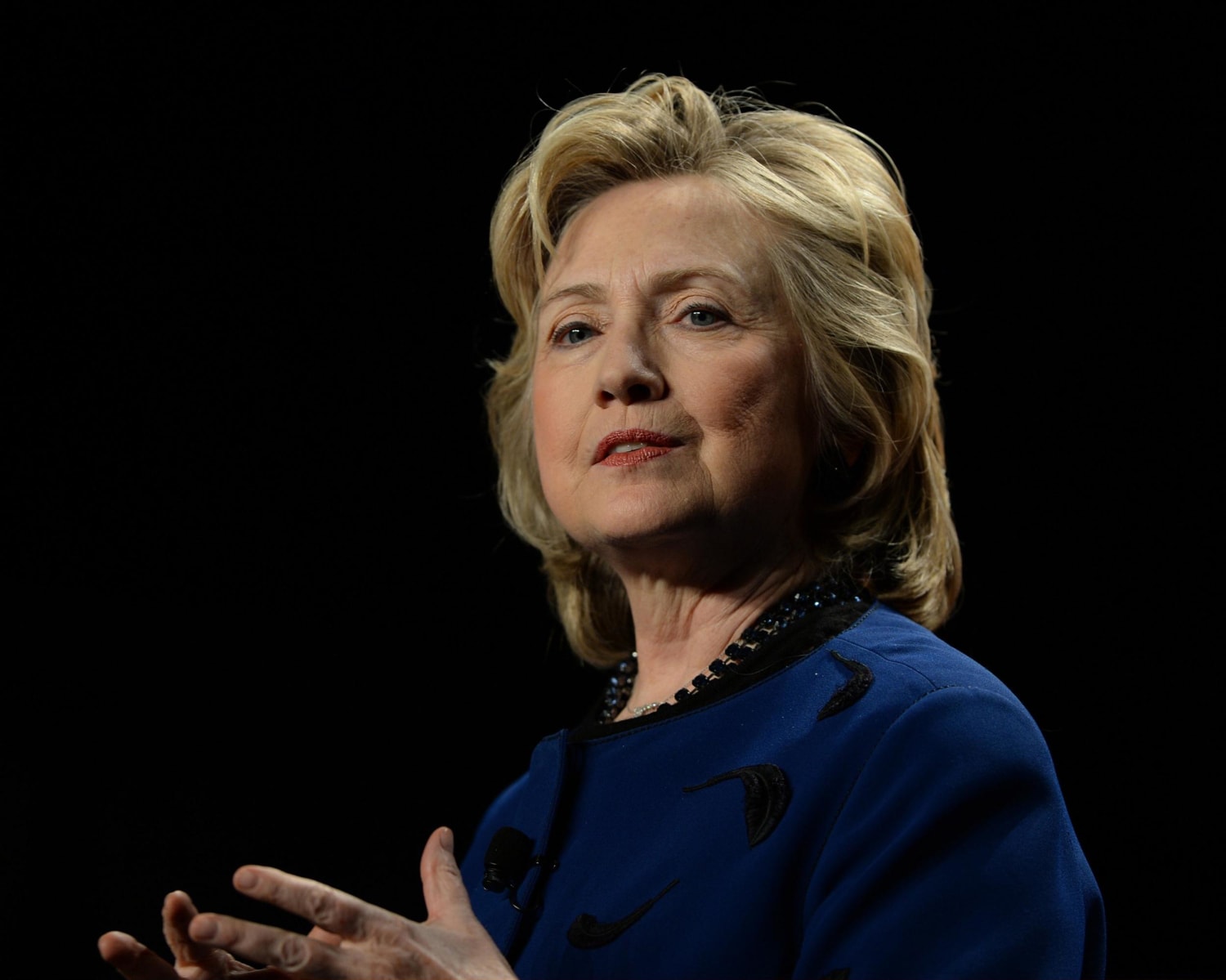
Hillary: A likeability problem?
We don't, unless Hillary Clinton is bold enough to go as close to full-bore economic populism as possible in order to convince the white working class that she's unequivocally on their side. That's a winning message. But who will pay for her to spread it during the campaign if wealthy donors desert her?

If Hillary isn't bold, we might end up with a debate between a Mitt-Romney-lite -- Jeb Bush -- and Robert Rubin's best friend -- Hillary Clinton -- with the two of them saying, "I will help the poor, working stiffs without raising taxes on the rich," back and forth to each other while trying to wink-wink-nudge-nudge the middle class that one is really a liberal and the other is really a conservative. It doesn't matter which one is calling the other a liberal or a conservative, because all we'll end up with is vague subtext.

And that will be a dull and vacuous campaign indeed. Let's hope one of them busts out into true battledress and draws the other out into the open.

I'm not holding my breath. Glad to be surprised.


Saturday, February 7, 2015

Clown Car Rundown, Person the First: Scott Walker Shows His Cards

We knew he was anti-education when he took away teachers' collective
bargaining rights. Now we know he regards truth as the enemy.


Scott Walker stepped in it this past week. It was bad enough that he announced he was asking the Wisconsin legislature to cut the UW university system's budget by 13 percent while freezing tuition at current levels for two years. He reckons to get past 2016 before the damage is visible. BTW, Walker suggests that professors "teach an extra class" to make up the shortfall.

It got worse, and Walker got some serious blowback for another move he made:
It was not enough for Gov. Scott Walker of Wisconsin suddenly to propose a destructive 13 percent cut in state support for the University of Wisconsin’s widely respected system. His biennial budget plan, released Tuesday, reached gratuitously into the university’s hallowed 111-year-old mission statement to delete a bedrock principle: “Basic to every purpose of the system is the search for truth.”
The budget — patently tailored for the governor’s conservative campaign for the Republican presidential nomination — inserted language that the university should be more narrowly concerned with meeting “the state’s work force needs.”
Brazenly deleted as well from the mission statement, which is nationally appreciated in education circles as the Wisconsin Idea, were the far from controversial goals “to educate people and improve the human condition” and “serve and stimulate society.” It was as if a trade school agenda were substituted for the idea of a university.
 Here is a man whose motives are clear: Destroy education to keep 'em down on the farm. What a dick.

He tried to brush it off as a "drafting error," only an email was discovered that showed the administration had ordered the specific edits. What a double dick.

Presidential? Timber!


Friday, February 6, 2015

Krugman on Krugman and His Detractors


Paul Krugman is my role model in punditry -- he's more of a professor than a pundit -- because he is so dogged, and he doggedly attempts to persuade while providing as much unvarnished data as he can. He doesn't mind being "shrill." He believes he's fighting the good fight.

I think he succeeds. His detractors are outraged. In this blog post, Krugman reflects on this harsh criticism. A good read.

Michael Kinsley went full-bore after Krugman over austerity. Why?

Note. I reread the Kinsley piece. He is only mildly contemptuous toward Krugman. What amplifies it are the rhetorical tricks he uses to mute the messages on both sides of the austerian debate. Krugman wasn't talking about endless platters of desserts, out-of-control spending, or budgets bigger than Jupiter. He was talking, yes, about the need for more stimulus spending -- especially with borrowing rates near zero -- and most especially about the paradox of thrift, which is cutting spending and saving more at a time of decreasing demand in the economy. When people -- and governments -- say, "I'm worried about my future, so I save more and spend less," the result is likely to be a further depressed economy in which demand drops further, and, guess what, you lose your job! Put that in your savings account!

Kinsley, instead, talks about how he doesn't know who's right or wrong, he just knows spinach is good for you and dessert is bad. He trims around the edges of the debate with snark and leaves little on the plate. His argument is an empty vessel by the time he's done being clever. A real debate can be had about whether austerity is a good approach during a down economy. He isn't taking part in that debate, but he takes his swings at Krugman. Why? To impress his friends?

Brad DeLong's deconstruction of Kinsley's article has the force of something called analysis, something sorely lacking in Kinsley's article. Advice to Kinsley: Snark is fine, just back it up with facts instead of tricks you learned in debate club.

I'm more ambivalent about Andrew Sullivan. I was annoyed by his heartfelt apologies for wrong past views, and I could have admired him for being so repentant about Iraq if the destruction wasn't so grim and on-going (ISIS anyone?). I did find his internal-debate style of blogging, including critical comments as he did, captivating. I clearly believe he's a formidable writer and commentator. Still, Krugman and DeLong are right about his unnecessary criticisms of Krugman while simultaneously claiming Krugman's right more often than not. It's like claiming okay, Angelina Jolie is beautiful, I just don't like the way she's beautiful. What's the point? (I'm sure it's that you don't like Angelina Jolie.)

In the end -- and Sullivan's blogging is ending -- Sullivan added a lot to the debate. I'm just not sure it added up to much beyond entertainment.

Finally, if you want to see a real snark-fest, google Niall Ferguson's pathological attacks on Krugman. Here's a primer.

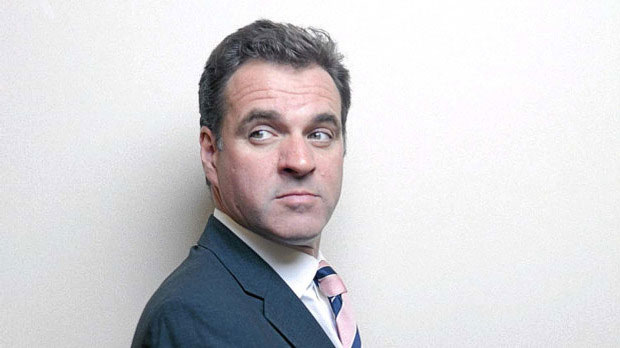
Niall Ferguson: Looking over his shoulder a bit too much?