Tuesday, November 12, 2013

Stand Up Against Immunization Hysteria

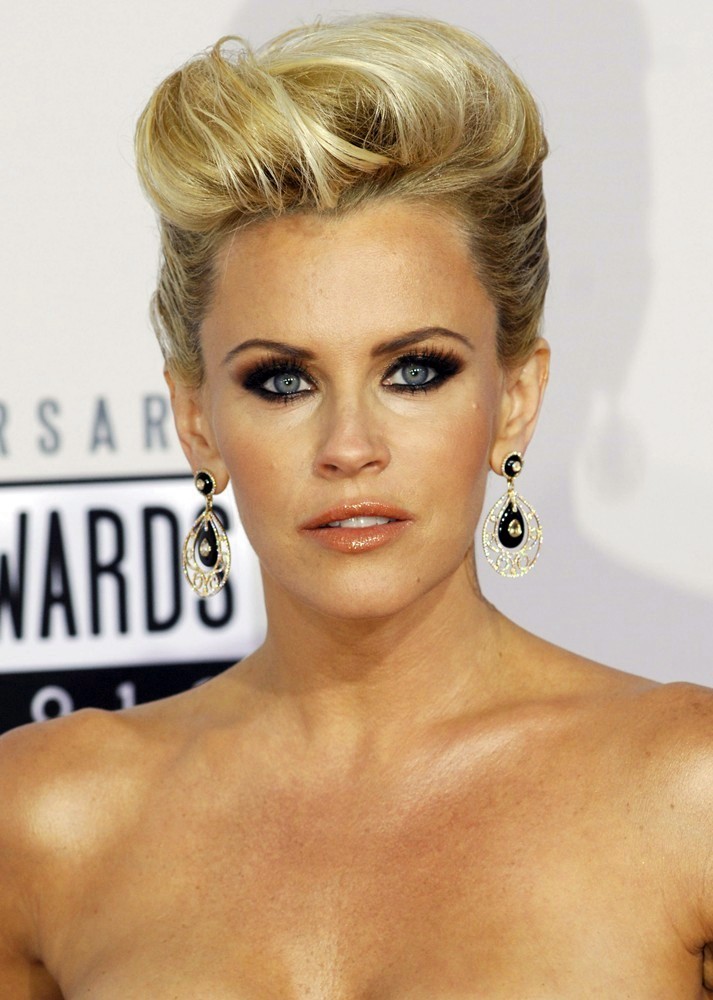
Jenny McCarthy, noted immunization unexpert.
Recent outbreaks of whooping cough in California highlight the dangers of diminishing the "herd
effect" of widespread immunization -- when 95 percent and above are vaccinated, the remaining handful are protected by the herd -- because of non-reality-based hysteria, often spread by discredited doctors and, unfortunately, overly cautious affluent parents who are prone to overprotecting their children.

One particularly grating proponent of this anti-immunization hysteria is former playmate, Jenny McCarthy. Here's what her "contribution" to the debate has produced:
There’s a reason that we associate the whooping cough with the Dickensian: It is. The illness has, since the introduction of a pertussis vaccine in 1940, has been conquered in the developed world. For two or three generations, we’ve come to think of it as an ailment suffered in sub-Saharan Africa or in Brontë novels. And for two or three generations, it was.
Until, that is, the anti-vaccination movement really got going in the last few years. Led by discredited doctors and, incredibly, a former Playmate, the movement has frightened new parents with claptrap about autism, Alzheimer’s, aluminum, and formaldehyde. The movement that was once a fringe freak show has become a menace, with foot soldiers whose main weapon is their self-righteousness. For them, vaccinating their children is merely a consumer choice, like joining an organic food co-op or sending their kids to a Montessori school or drinking coconut water.
The problem is that it is not an individual choice; it is a choice that acutely affects the rest of us. Vaccinations work by creating something called herd immunity: When most of a population is immunized against a disease, it protects even those in it who are not vaccinated, either because they are pregnant or babies or old or sick. For herd immunity to work, 95 percent of the population needs to be immunized. But the anti-vaccinators have done a good job undermining it. In 2010, for example, only 91 percent of California kindergarteners were up to date on their shots. Unsurprisingly, California had a massive pertussis outbreak.
I can only rely on my memories of Marin County news stories -- Marin is an affluent region just over the Golden Gate Bridge from San Francisco -- but I recall that affluent, well-educated moms are quite susceptible to falling victim to misinformation about immunization dangers. Long after they're discredited. Worry-wart moms don't "want to take a chance" that the reports are true. The resulting loss of protection often results in outbreaks of diseases once thought rendered to the trash bin of history.

Wrong. Any disease can make a comeback if we relax our guard. Thanks, Jenny McCarthy.

Parents, wise up. Have your kids vaccinated. School districts, stay tough. Don't let hysterical, misinformed parents refuse their shots on "religious grounds." The results are awful:
In 2010, a whooping cough outbreak in California sickened 9,120 people, more than in any year since 1947. Ten infants died; babies are too young to be vaccinated.
Public health officials suspected that the increased numbers of parents who refused to vaccinate their children played a role, but they couldn't be sure.
Vaccine refusal was indeed a factor, researchers now say. They compared the location and number of whooping cough, or , cases in that outbreak with the personal belief exemptions filed by parents who chose not to vaccinate for reasons other than a child's health. (Some children with compromised immune systems aren't able to be vaccinated.)
Pertussis is very contagious, spreading quickly through a community. So the researchers had to map not only the location of outbreak clusters, but also when they appeared.
They found that people who lived in areas with high rates of personal belief exemptions were 2 1/2 times more likely to live in a place with lots of pertussis cases. "The exemptions clustered spatially and were associated with clusters of cases," Jessica Atwell, a graduate student at Johns Hopkins Bloomberg School of Public Health and lead author on the study, told Shots. It was in the journal Pediatrics.
This is science, folks, science that works to protect our children. Don't listen to the charlatans.

Footnote. Found the facts on Marin County vaccination rates. It's true, the County has a real problem:
Personal belief exemption rates statewide had remained fairly stable at about half of 1 percent for many years until the late 1990s, when a now-discredited report linked childhood immunization to autism. Since then, the rate has been rising steadily, reaching 2.79 percent statewide in 2012-13.
Here in Marin, the personal belief exemption rate has nearly doubled from 4.2 percent in 2005 to 7.83 percent in 2012-13. [emphasis mine.]
 Come on, affluent, educated Marin, knock it off. This is a public health issue.

Small owie, big protection, miniscule risk.

Monday, November 11, 2013

The Best Way to Honor Our Veterans

...is not to get into any more wars over bullshit or avoidable military conflict. Of course, Barack Obama was "weak" for figuring out how not to bomb Syrians over chemical weapons, which are now being destroyed by peaceful means by the United Nations.

I honor all veterans this Veterans Day. I honor them by hoping that the Veterans Administration figures out how to take care of them all, and by hoping that the State Department and the DOD figure out ways of avoiding conflicts in the future.

Yes, fewer veterans! And fewer graves!


Insurance Companies Cancelling Healthcare Policies and Deceiving Their Customers

Who would have thought they might do this?

Yes, it's another slant on Obamacare, that insurance companies would cancel policies, then offer inflated ones without even telling their customers that they can find cheaper, better ones on the insurance exchanges, even ones from their own companies. Now we get the inside scoop on what's happening to those "grandfathered" health insurance policies:
“Blue Cross successfully enticed tens of thousands of its individual policyholders to switch out of their grandfathered health plans and forever lose their protected grandfathered status,” states the lawsuit. “Blue Cross concealed information about the consequences of switching plans and intentionally misled its policyholders to encourage the replacement of grandfathered policies.
Up to 900,000 policies have been cancelled in California alone. Meanwhile back in Kentucky, they've already fined Humana $65,000 for misleading information in their cancellation letters:
The Kentucky Department of Insurance has fined Humana $65,430 because it offered policyholders an unapproved opportunity to amend their insurance as part of a letter that regulators have called “misleading.”
The department investigated letters sent in August to 6,543 individual plan policyholders in Kentucky. The letters said they needed to renew their plans for 2014 within 30 days or choose a more expensive option that complies with the Affordable Care Act.
But regulators last month called the letters misleading, arguing they did not make sufficiently clear that policyholders could compare and choose competing plans on the state’s health insurance exchanges, which open on Oct. 1, and for which they could be eligible for federal subsidies.

Now surfaces a complaint in Georgia of Humana manipulating its customers by diverting them away from their own government health-exchange plans to more expensive ones. I can't verify this, but you can read about it here.

An earlier investigative report was published by Talking Points Memo about these fraudulent practices emerging well in advance of the Oct. 1st rollout:
Donna received the letter canceling her insurance plan on Sept. 16. Her insurance company, LifeWise of Washington, told her that they'd identified a new plan for her. If she did nothing, she'd be covered.
A 56-year-old Seattle resident with a 57-year-old husband and 15-year-old daughter, Donna had been looking forward to the savings that the Affordable Care Act had to offer.
But that's not what she found. Instead, she'd be paying an additional $300 a month for coverage. The letter made no mention of the health insurance marketplace that would soon open in Washington, where she could shop for competitive plans, and only an oblique reference to financial help that she might qualify for, if she made the effort to call and find out.
Otherwise, she'd be automatically rolled over to a new plan -- and, as the letter said, "If you're happy with this plan, do nothing."
If Donna had done nothing, she would have ended up spending about $1,000 more a month for insurance than she will now that she went to the marketplace, picked the best plan for her family and accessed tax credits at the heart of the health care reform law.
How much more of this fraud are we going to see before we realize that Barack Obama is not the one who should apologize for his "misleading statements?" I suspect a lot, though I don't expect the mainstream media to pick up on this story until they're led kicking and screaming to the truth by bloggers and other alt reporters. McClatchy's Kentucky paper linked above is an exception worth noting.

Also worth noting is the fact that, depending on the state or the circumstance, this behavior is not illegal or actionable in court. A business is not necessarily required to inform a customer that a rival has a better product or even that that very business has a better, less expensive product! Yay, free enterprise!

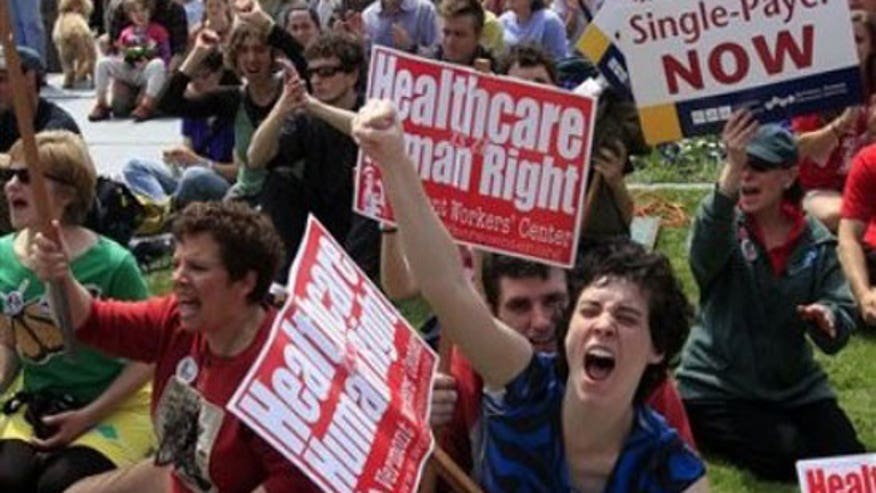
We Already Created a Single-Payer Healthcare System. It's Called Medicare. It Works.


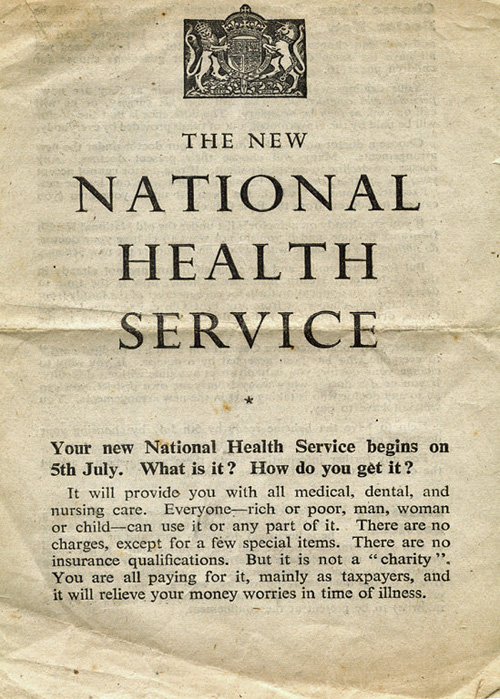
The British National Health Service came into being shortly after World War II.


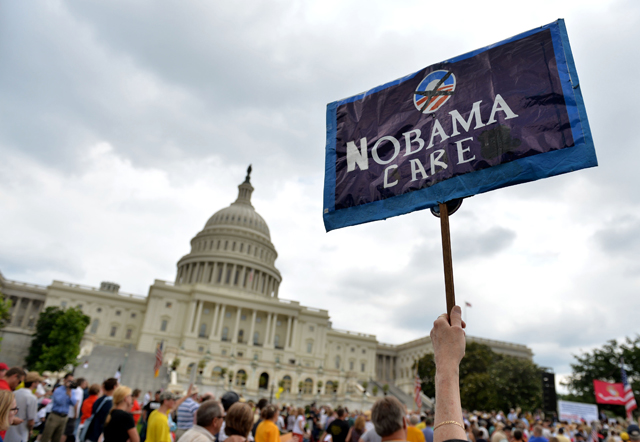
Obamacare may eventually "work." In fact, people like me have been rooting for it since it passed Congress and was signed by President Obama in 2010.

Only one thing: The rollout was so disastrous that many, myself included, pressed pause and looked around. Like I said, maybe the PPACA will work, sort of, which is all we expected anyway. Now, however, the stunted rollout let us think back to what we really should have settled for, and that's a single-payer, universal healthcare model.

Henry Blodget in Slate:
The American health care system sucks. We pay more for health care than any country in the world and we only get average results. And tens of millions of Americans have no health insurance. Our latest attempt to address this situation, Obamacare, is a mind-numbing kluge of laws and policies that is off to a very rough start. And even if Obamacare ends up working, it will only fix part of the problem.
The problem, as a ground-breaking article by Steve Brill made clear, is that America's health care providers and insurers treat people differently. If you're lucky enough to be included in a big insurance plan provided by a huge entity with a lot of negotiating leverage (such as the federal government), you pay low rates and low prices. If you're unfortunate enough to be in a high-risk group or not to be included in any plan, you pay sky-high prices. Or you get all your "health care" from the emergency room and, thus, lay the costs off on everyone else that way.
The answer, as Brill's article also made clear, is a fully national health insurance system, in which all Americans are covered in the same massive group and for-profit insurers and health care providers can't pick and choose who to cover and how much to charge them. This system would effectively extend the current Medicare and Medicaid system to the whole population, and, in so doing, make it even more efficient.
As in some other countries with national health insurance, Americans insured under this system would also be free to buy additional health care services, including additional private insurance. The system, in other words, wouldn't limit anyone's ability to pay for "premium" health care services if they chose to.
But a lot of Americans still hate that idea. They have been told since birth that "national health care" is a disgrace. They have been brainwashed so thoroughly by America's vastly profitable medical industrial complex that their resistance to reality and change has become a religion.
Anti-change advocates don't assess facts. They just claim, absurdly, that America currently has "the finest health care system in the world" and then cite horror stories about sick people dying in streets because they have to wait so long to get the (terrible) health care services available to them under "socialist" health care. (This horror story, naturally, is presented as the polar opposite of our current system, In fact, in many ways, it's similar. Today, in America, many people without health insurance spend their lives waiting until they get so sick that they can go wait in emergency rooms. And then our often wildly profitable hospitals pay for their care by, effectively, sending their bills to everyone else.)
 Blodget goes on to relate the experience of one American expat in the UK who knows firsthand how good the National Health Service is, in spite of the endless false propaganda over here. And those of us who have lived and worked abroad -- in my case Europe in the early 70s and Japan in the late 80s -- know how well national, single-payer, government-run healthcare can be, whether tightly regulated insurance or private doctors and hospitals are in the mix. There are a lot of ways to deliver universal healthcare successfully. America's just not one of them.


And, I hate to say, neither is Obamacare. But we knew that. For progressives -- and for quite nearly the rest of the developed world -- Obamacare represented "the best we could do under the political circumstances." Now we know from the rollout and the first reports of some of the prices in the individual markets, along with the deviltry the insurance companies and perpetrate during the ensuing confusion, not to mention the chaos created by the red states' purposeful refusal to cooperate with the program, that Obamacare was destined to come to life in this pathetic way.

It might still work out and "make things better." And progressives should not stand in the way of the rollout. But we owe it to the country to keep repeating, in every venue possible, that we knew all along that the single-payer universal model was superior. And we still want it and will fight for it.

Saturday, November 9, 2013

Saturday Night Music: The Avett Brothers

I heard this coming down from Oregon last year, on one of the great Jefferson Public Radio programs. Now it's in my repertoire, and it really speaks to me. Let's send this out to the city of Detroit (apropos of the 3rd verse), that could use a little respect right now:


Happy Saturday nite.

The Trouble with Obamacare, Ad Nauseum


Thinking of the myriad troubles and disappointments of both the substance and rollout of the Afordable Care Act, I'm reminded of a joke I discovered recently:
Jean-Paul Sartre walks into a Paris cafe, sits down and says to the waitress, "I'd like a coffee with no cream."
The waitress replies, "We have no cream. Would you like one with no milk?"
The joke, a very inside one it seems, depends on understanding Sartre's basic tenets. I suppose that one of his major works is titled Being and Nothingness might be a reasonable tell.

In any event, it suggested to me where the ultimate failure, or flaw, lies with Obamacare: It either lacks cream (a public option) or milk (a stronger individual mandate).

One could argue that it's not being a single-payer, Medicare-for-all program is its most egregious failing, but what's germane is what would have been possible in 2009 given the political realities. Progressives could have held out for a public option -- if blue-dog senators could have been swayed -- or in the face of stiffer red-state Democrat resistance at least a stronger individual mandate, such as requiring more forceful, more immediate penalties for opting out of insurance.

From a business/market perspective, removing the private-insurance model from health care altogether would be the no-cream version while much more strictly regulating insurance coverages might be the no-milk variant.

Yes, this is just an exercise in examining the limitations of American politics in an age of ultimate ideological stalemate. But it also demonstrates the limits of bipartisan compromise: Proposing a bill that guarantees automobile safety by lowering the speed limit to zero won't get us anywhere. And "throwing the red states a bone" by eliminating the seat-belt requirement wouldn't sweeten the deal enough for passage.

Progressives need to learn that compromise -- something only progressives seem to do these days -- usually lands them not in the middle but instead in some dismal no-man's land.

Sweetening the Affordable Care Act by eliminating the public option amounted to giving us the Obamacare we deserve. And for someone who likes cream in his coffee, the outcome may be pretty black indeed.


Footnote. I'm not saying that Obamacare won't or can't improve the health-care system in the U.S. The point obviously is that it could have been so much better were it not for "political realities." And what we're left with has enough challenges to drag us down for years before we reap what benefits are actually in store. In the meantime, can we count on overcoming the obstacles the right is throwing in front of us on the way to a successful, long-term rollout? We won't know that for a while, either, hence the dark outlook.

Letting the States Be the "Laboratories of Reform"

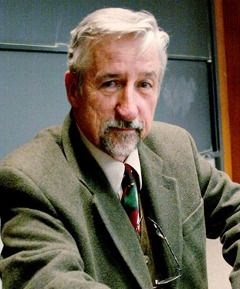
Tom Hayden, born of the
anti-war movement of the 60s.
Daily Kos pointed me to this article by longtime California progressive Tom Hayden, lately of The Peace and Justice Resource Center. In it Hayden touts the advantages of progressives turning the tables on red states, which claim "states' rights" to be the special province of right-wing, culture-warrior prerogatives and shows how California under Governor Jerry Brown has often struck the right balance in moving the state towards a modern model of a government that serves the needs of its people. Hayden:

Governor Jerry Brown is finding California to be an effective Archimedean leverage point in shaping a progressive alternative to a federal system stalemated by the New Civil War.
The latest example is a West Coast pact to combat climate change by the governments of California, Oregon, Washington, and British Columbia, a region populated by 53 million people with a GDP of $2.8 trillion.
The plan will produce energy savings, green jobs and greenhouse gas reductions, and will exploit any new Obama emissions standards that will eliminate new coal plants. California also will soon forge a carbon-reducing trading market with Quebec. The growing clean energy bloc will pressure for adoption of a new global energy agreement in 2015. 
California created similar leverage by adopting energy efficiency standards and renewable energy incentives in the Seventies, when America was paralyzed by Detroit's political monopoly over transportation policies favoring gas-guzzlers. At least fourteen states, led by California, formed an alternative energy bloc that resulted in greater fuel efficiency, consumer savings and domestic manufacturing jobs.
Governor Moonbeam no more?
I found it telling that Hayden has adopted language I introduced in my blog over a year ago -- not suggesting I thought of it first! -- mostly because I find the model helpful in understanding the behavioral aspect of the political fracturing of America brought on by the election of Barack Obama. And it's telling that Jerry Brown has, on a large scale -- California's is the ninth largest economy in the world -- helped shape a nation-sized set of reforms that hints at what an American-style progressive state can provide its people. In turn, California can set standards for other states to follow, not something new as demonstrated over the years by the leadership the state has provided on energy and conservation issues, marijuana decriminalization, and marriage equality.

California's road to reform has been choppy at times and not always progressive, as Hayden points out:
The truth is more that California politics today have evolved through the very snares that are causing national politics to be so broken. Today's right-wing insurgency symbolized by the Tea Party began its virulence with the Prop 13 voter revolt against property taxes in 1979.  Today's anti-immigrant phobia arose with Pete Wilson's TV commercials of immigrants racing across the border, and with Orange County politicians sending sheriffs to inspect polling places for voter fraud by Latinos. California gave America the Three Strikes crusade. Californians threw out three competent and qualified state Supreme Court judges on the grounds that they were soft on crime. California's LAPD created the national model for SWAT teams and riot control.
As a Californian, I now feel comfortable in the liberal bastion of the San Francisco Bay Area. Yet California as a whole has been far from a progressive's dream over the decades, as the agricultural and rural regions harbor deep-seeded conservative and libertarian impulses perhaps dating from the Oklahoman migrations of the 30s. Remember, California elected Arnold Schwarzenegger twice in the last decade (he left office in 2010!).

Hayden points out that Jerry Brown has learned to balance these divergent interests in ways a younger Jerry Brown had failed to do:
Brown's initiatives are far from perfect, of course. His climate change policies have failed to address fracking beyond moderate regulatory adjustments. His law-and-order approach helped fuel mass incarceration, and he refused to lift a finger, at least publicly, when hundreds of inmates went on hunger strike against brutal conditions of solitary confinement. Those failures only show that social movements have more pressure work ahead, since Brown is careful about positioning himself too far in front of public opinion. The opposition to fracking will only grow when more Californians in the Monterrey Shale region are impacted, as happened with homeowners all across suburban New York. And Brown may turn to prison reform once his court appeals are turned down for a final time, which is likely to be soon. Then he can blame those judicial mandates for any reforms he adopts while running for re-election next year. Politics is an ugly world, but that's what they have confessionals for.
Yes indeed. Still, I'll gladly vote again for Brown should he -- as people expect him to do -- run again in 2014. I might not like everything we get from a "careful" Jerry Brown, but he has built a government that functions, often in a progressive way. I'll take that any day.

Rick Perry's Texas: What kind of "laboratory" are they forging down there?

Read Hayden's whole piece. It offers a view of what progressivism can do state-by-state, even in today's uneven, uncivil political climate.