Wednesday, August 7, 2013

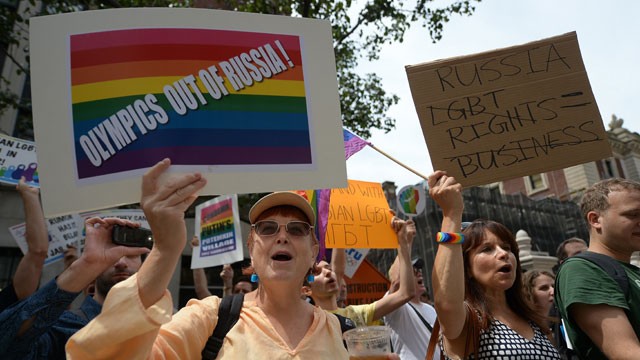
Corporations: Don't Sponsor 2014 Sochi Winter Olympics

Russia is poised to host the 2014 Winter Olympics in a few months. In spite of that, the government -- most assuredly driven by Vladimir Putin -- pushes on with severe anti-gay laws. Russian society seems fertile ground for anti-gay hate. It's pretty shocking. The Duma voted in a new anti-gay law last month, passing it 436-0.

Is Russia the place to celebrate the Olympic spirit?

Russian youths attack a gay activist. A civilized nation that deserves the Olympics?

We need a broad-based movement either to boycott the Sochi Olympics or make sure the issues -- and support of LGBT athletes -- are front and center as the Olympics progress.
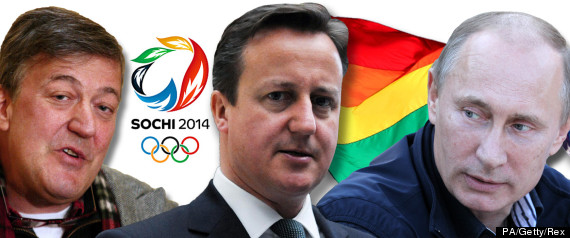

This is the Brits' reaction: Ban it!! Putin? Heartburn fer sure...

I'm inclined to simply boycott Russia, and boycott the Olympics. Uh, we've made NO PROGRESS? Rarely shout, but Russian anti-gay stance is offensive to open societies everywhere.

George Takei of Star Trek fame steps forward: No winter Olympics for Russia!!

Jump on board the boycott. Lean on NBC, the TV sponsor. Pressure the corporate sponsors. Make them pay for endangering the LGBT community around the world. Russian anti-gay laws are an anachronism that run counter to the spirit of enlightened people everywhere. Surely the Olympic spirit is meant to support freedom and safety.

I personally will not support or buy any product from any sponsor -- from any country -- of the Sochi Winter Olympics. I will express my opinion of their participation where I can on social media. Any sponsor that uses the opportunity to use their advertising perch to express support for freedom and safety for LGBT athletes may get my support.

Even if efforts fail to dislodge the Olympics from Russia, all efforts should be made to embarrass Russia for being a backward country that doesn't deserve the respect of a 21st-century world.

Bad press for Russia is popping up all over. Examples are here, here, and here.

Both Barack Obama and Jay Leno speak out against Russia's anti-gay
stance during the president's recent appearance on the Tonight Show.

The New Yorker covered Barack Obama's remarks on Jay Leno's show:
Leno: Do you think it will affect the Olympics?
Obama: I think Putin and Russia have a big stake in making sure the Olympics work, and I think they understand that for most of the countries that participate in the Olympics, we wouldn’t tolerate gays and lesbians being treated differently. They’re athletes, they’re there to compete. And if Russia wants to uphold the Olympic spirit, then every judgment should be made on the track or in the swimming pool or on the balance beam, and people’s sexual orientation shouldn’t have anything to do with it.
(Applause.)
Leno: Good enough for me.
Obama has a way of coming out on the record for causes he believes in. He does lend support for many of the right causes (even if he's conventional when it comes to Wall Street and national security, sigh). Anyway, kudos for his stance on the Russian anti-gay question.

Protest is broader than I thought. Sen. Jeff Merkley (D-Ore) is on board.


Simple Blogging about Guns

Legal gun for average user in the U.S. Fuck yeah!

Here's a legal -- sort of -- gun owner with her new rifle:

Real gun owner -- pictured on an online gun forum. 2nd Amendment, fuck yeah!

This has been simple blogging about guns. Uh, in America. Freedom! Simple link about gun accidentss.

Monday, August 5, 2013

Curing Income Inequality: Strengthen Labor.

Anyone who has studied or lived through the rise of labor in the 30s and 40s and the fruits of labor victories in the 50s, 60s, and 70s knows that what made the rise of the American middle class possible was the clout of labor unions. Skilled blue-collar workers could work hard, raise families, send kids to college, and have expectations that those kids would do better than they did. In general, they did do better. Public-sector unions did their part, protecting the wages of government workers.

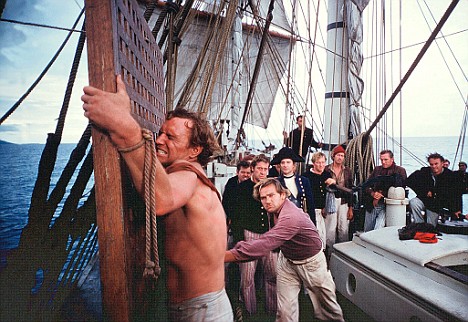
Good wages didn't come easily, even in the 1950s.

Those hard-fought victories include aspects of American life that we've framed as the American Dream. Americans today are decrying the loss of the American Dream, and those on the left blame it on anti-union and anti-labor sentiment, while those of the right claim that it's because we lost our sense of personal responsibility and 47% of us are takers.

The funny thing is that during all those years, we elected Democrats -- like Truman, Kennedy, Johnson -- and Republicans -- like Eisenhower, Nixon, Reagan -- with equal enthusiasm. The turning point, however, was the ascendancy of Ronald Reagan, who ushering in the era of anti-unionism with his handling of the PATCO strike, where he singlehandedly broke a major union. He did this while gathering disaffected blue-collar workers who then became known as Reagan Democrats.

The irony is that the man who brought blue-collar workers into the Republican fold was the same man who vowed to destroy labor. Every since then -- most economic historians mark the beginning of Reagan's first term as the beginning of 30 years of declining wages -- labor has not only lost power to capital but has also lost tremendous wealth to the upper quintile, the upper 5%, 1%, 0.1%. Any way you view it, capital is kicking labor's ass.

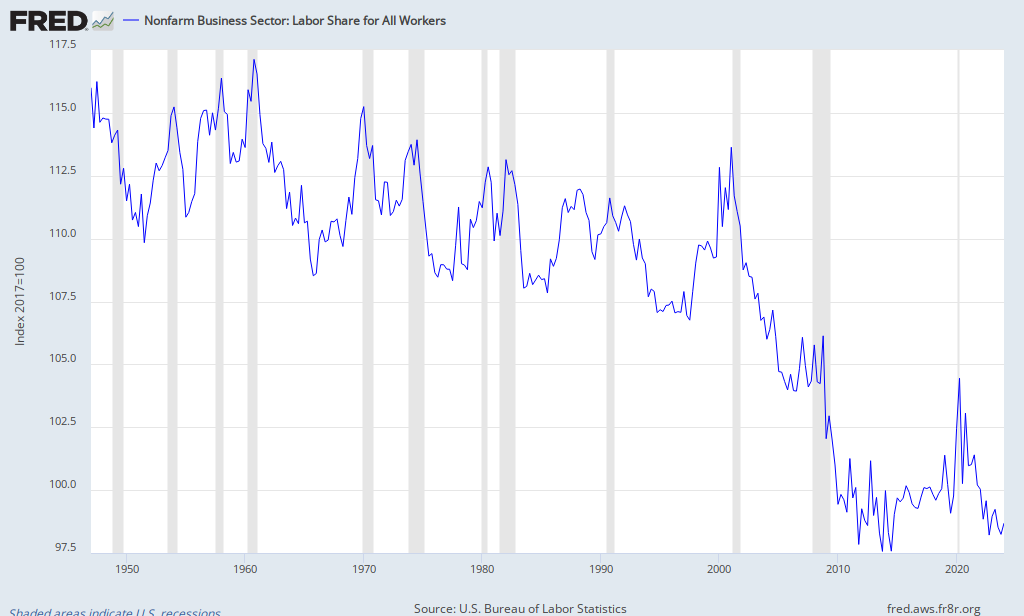
This chart from the St. Louis FED shows labor share of income falling beginning in 1980, except for the period marked by the tech bubble during the Clinton years:


This is all the more surprising because labor productivity has risen steadily throughout the whole period:


Kenneth Thomas, political-science professor at University of Missouri-St. Louis, whose blog is where I found these charts, explains it well:
An even bigger problem is that the compensation series includes all workers, not just average workers, so it lumps CEOs and janitors together in a single measure even though we know that the 1% soaked up most of the income gains before and after the Great Recession. Moreover, the nonwage portions of compensation, such as health insurance and defined benefit pensions, have eroded much more for average workers than for the 1%. Thus, this measure is completely unsatisfactory for understanding what has happened to the average worker.

So, we come back to Table B-47 and the real wages of production and non-supervisory workers. The fact that, adjusted for inflation, wages still remain almost 14% below what they were 40 years ago, despite a doubling in productivity, is a national disgrace. It is one of the roots of the increase in multi-income households, in higher levels of indebtedness needed to maintain consumption levels, and of the sharp increase in inequality we have seen over recent decades.
This is not the first time this has happened:


Compare 1923-1929 with 2002-2007. We had serious crashes after both 1929 and 2007.

Can anyone possibly imagine what will follow if we can't cure income inequality?

Now, in simplest of terms, how do we describe such a situation of income inequality as illustrated in these graphs? I describe it as a disparity between capital and labor. We can talk about how the upper 1% have all the money, but that's not as helpful in illustrating the problem. Let's just call capital the upper 20% (with the top 1% of that having most of the wealth) and labor the bottom 80%. The solution to income inequality is redistributing wealth down from the top 20% to the bottom 80%.

How do we do that? By empowering labor over capital. Who does that best, historically?

Labor unions. Strikes pressing for a living wage are a good start. Go labor!


Saturday, August 3, 2013

Clear Thinking in Support of Fiscal Stimulus -- with a Smackdown of Those Who Said It Can't Work


The best way to fix the economy? Conservatives think so.

The first part of this post is lifted in its entirely from a blog post by Oxford economics professor Simon Wren-Lewis, a particular favorite of Paul Krugman:
Well here is Nobel prize winner Robert Lucas:
 But, if we do build the bridge by taking tax money away from somebody else, and using that to pay the bridge builder -- the guys who work on the bridge -- then it's just a wash. It has no first-starter effect. There's no reason to expect any stimulation. And, in some sense, there's nothing to apply a multiplier to. (Laughs.) You apply a multiplier to the bridge builders, then you've got to apply the same multiplier with a minus sign to the people you taxed to build the bridge.
And here is John Cochrane, also a professor at Chicago, and someone who has made important academic contributions to macroeconomic thinking:
Before we spend a trillion dollars or so, it's important to understand how it's supposed to work. Spending supported by taxes pretty obviously won't work: If the government taxes A by $1 and gives the money to B, B can spend $1 more. But A spends $1 less and we are not collectively any better off.
Both make the same simple error. If you spend X at time t to build a bridge, aggregate demand increases by X at time t. If you raise taxes by X at time t, consumers will smooth this effect over time, so their spending at time t will fall by much less than X. Put the two together and aggregate demand rises.
This is a completely clear takedown of Robert Lucas and John Cochrane, two economists of the freshwater school, often described as neoclassicists or Real Business Cycle advocates -- as opposed to Keynesians like Krugman and Wren-Lewis. The mistakes ascribed to Lucas and Cochrane do seem like undergraduate-level errors that Wren-Lewis described by saying " I prefer to just note that if any undergraduate or graduate student in the UK wrote this in an exam, they would lose marks." Ouch.

The key here is that the time differential between spending and taxation to pay for it leads to aggregate demand rising. As aggregate demand rises, unemployment falls. As unemployment falls, aggregate demand continues to rise. This is called a multiplier effect, and because of it tax revenues rise, which can pay for the original stimulus or reduce the need for a permanent tax rise. Or it can pay down debt or go towards further stimulus, which then has an additional multiplier effect.

I'm not an economist, so I hope what I just wrote is accurate. It sure makes sense to me.

This is important because those who oppose fiscal stimulus and instead promote fiscal austerity have come to rely on Lucas, Cochrane, and other right-wing ideologues for their rationale. That the rationale is bunk matters, but not to the ideologues who employ it.

It's hard enough getting politicians who are predisposed to fight regulation and actions like fiscal stimulus and infrastructure spending to do the right thing to create more demand and more jobs. When the institutional elite at prestigious schools like Chicago give them cover, we've got our work cut out for us.

Thanks to the Keynesians -- or New Keynesians, if you will -- for fighting the good fight. Paul Krugman goes over this very particular misconception on the right -- some may think he goes over and over and over it to a fault -- mainly because it's the central economic failure of our time, that of failing to use fiscal stimulus, infrastructure spending, and out and out giving away free money to drive down unemployment, especially at a time when we're up against the zero lower bound and interest rates near zero make the cost of government borrowing insanely cheap. What's more, we've got bridges, water systems, highways, railways, and harbors that could sure use some fixing. Why aren't we doing it?

But, as Krugman points out ad nauseum, the Very Serious People think we need to suffer for our profligacy, and so the beatings will continue until morale improves. Or something like that.

All I can say is: good grief!


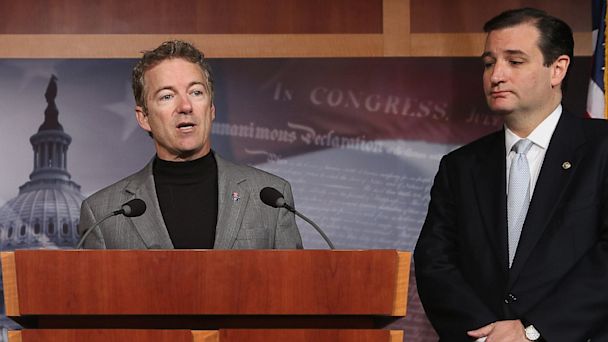
House GOP + Ted Cruz + Rand Paul = Chaos!


Political Armageddon: Cruz and Paul are for it.

I'd been wondering for some time if I could believe my eyes and ears when I heard statements indicating that radical-right elements in the House and a couple of such, like Ted Cruz and Rand Paul, in the Senate meant to take the country to the brink and beyond over defunding Obamacare, with the threat being defund it or we shut down the government and, by refusing to raise the debt ceiling, crash the entire world economy.

Yes, it turns out, I could believe my eyes and ears.

Here's Paul Krugman's take on it, in which he gets to the heart of the matter:
In the short run the point is that Republican leaders are about to reap the whirlwind, because they haven’t had the courage to tell the base that Obamacare is here to stay, that the sequester is in fact intolerable, and that in general they have at least for now lost the war over the shape of American society. As a result, we’re looking at many drama-filled months, with a high probability of government shutdowns and even debt defaults.
Over the longer run the point is that one of America’s two major political parties has basically gone off the deep end; policy content aside, a sane party doesn’t hold dozens of votes declaring its intention to repeal a law that everyone knows will stay on the books regardless. And since that party continues to hold substantial blocking power, we are looking at a country that’s increasingly ungovernable.
The trouble is that it’s hard to give this issue anything like the amount of coverage it deserves on substantive grounds without repeating oneself. So I do try to mix it up. But neither you nor I should forget that the madness of the GOP is the central issue of our time.
Don't sugercoat it, Paul.

Speaking of Pauls, there's that Ryan fellow, who is a great source of this madness. Greg Sargent over at The Plum Line at WaPo, using the same phrase, "reap the whirlwind," tells us how approving the Paul Ryan budget year after year has set quite a trap:
As I noted here yesterday, by refusing to definitively shoot down the idea that Obamacare should be defunded through a government shutdown confrontation, John Boehner and GOP leaders continue to feed the delusion that this could happen. This could make it harder for Republican leaders later because conservatives — thanks also to years of the GOP leadership’s nurturing of Obamacare repeal fantasies — could be even less likely to accept any bill funding the government that doesn’t also defund Obamcare.
But it needs to be noted that the same dynamic is at play on spending. Republican leaders have been feeding the base delusions about spending for literally years now. The Paul Ryan fiscal blueprint has been enshrined as the party’s Holy text, but its basic goal of balancing the budget in 10 years with no new revenues has always been a pipe dream, as this week’s events showed. What’s more, GOP leaders have steadily misled their voters about the concessions Democrats have already made on spending cuts, and about the concessions Obama continues to offer them now. [Emphasis mine.]
Things have gotten so wacky ultra-conservative Charles Krauthammer of WaPo calls today's GOP "nuts." Read it or just take my word for it.

A must-read (can't believe I'm saying that) is Michael Gerson, also of WaPo, who's started making sense as the Republicans have stopped making any:
First, it seems to involve a rigid form of economic determinism. Cruz argues: “Jan. 1 is when the exchanges start and subsidies start. . . . It is an iron rule of politics that those who receive subsidies, inevitably, after they start receiving those subsidies, fight to retain those subsidies.”

This “iron rule” is Mitt Romney’s 47 percent comment unbound — the government-dependence theory of politics. When the subsidies start flowing, it is all over, even if the system itself is a dysfunctional mess. This is a critique of the American people more than of Obamacare. Once again, it is hard to persuade voters you regard as potential benefit addicts.

Second, tea party ideology also involves a counterproductive disdain for the Republican Party. “Let me be clear,” Cruz famously said, “ I don’t trust the Republicans. ” Other tea party activists spin third-party fantasies. But the Republican Party is the only institution capable of reversing Obamacare. Here is an actual iron rule: A measure passed by a Democratic president, House and Senate (and approved by the Supreme Court) can be reversed only by a Republican president, House and Senate. And the picking of lopsided, losing fights makes this prospect less likely.

Third, these strategic considerations make no difference to those who regard strategy itself as evidence of compromise. In this view, the hopeless battles are the most purifying. This is the romance of Cruz and of Custer — but both are myths that end in pointless defeat.
I could go on. If you want more, cruise the editorials at the big papers (I don't cruise Wall Street Journal editorials because they live in some parallel universe) and you'll find the theme is consistent: Today's GOP is crazy, the worst Congress in history, they're deeply nuts EXCEPT it makes sense because of gerrymandering and fear of a primary challenge from the extra-super-right-right. I'd say I'd like some of what they're smoking, except ewww.

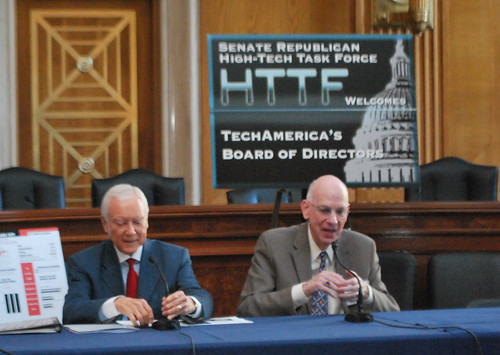
Case in point: Utah senators Orrin Hatch and Bob Bennett. Bennett got
tea-party primaried out, and Hatch flew further right. (Is that even possible?)

Friday, August 2, 2013

Red States Are Welfare States. So, What's the Point?

Ted Cruz: He wants to defund Obamacare
because he hates the Texas poor? Maybe.
By and large, Republican-leaning states run deficits with the federal revenue system -- they receive more in federal aid than they give back in federal tax revenue -- when compared to blue states. There are exceptions, like newly bluish New Mexico, where the cost of a high Native-American population comes into play, and DC, where the large black population can't pay the higher tax bills the richer Washingtonians, who live in Maryland and Virginia anyway, might pay.

So what are we looking at? As a basic premise, red states are predominantly Southern states that not only have a high black population but have also had the long-standing tradition of "keeping the Negroes down." I believe that's a huge factor.

Once, when visiting Mobile, Alabama, to meet my then-girlfriend's family, I observed that blacks had a noticeable amount of the low-end jobs and that segregation seemed just as complete as when I lived in the South in the 50s. There were all-white high schools and all-black high schools, etc.

My girlfriend noted that "It's a great waste of talent and labor to keep the blacks down." I hadn't thought of it that way, but it really struck me as making sense. It's not just a tragedy but a colossal blunder. And it demonstrates how the heritage of the Civil War and slavery still haunts the South.

Robert J. Bentley signs tough Alabama anti-immigration law,
which has led to a shortage of workers in agriculture.
Now, that was 25 years ago, and I'm sure things have changed, but I wouldn't be surprised if they haven't changed much. Among other things, notice how the Southern and Sun-Belt states favor voter ID laws that have proven to suppress minority voting. We've still a racially divided country, and it shows up more in the distressed areas of the country, and those areas are all over the South, as well as some Northern and Western cities. Those cities, like Los Angeles, Chicago, New York, and Philadelphia may have under-performing minority populations, and a form of self-segregation still takes place. But the overall economic dynamism of these great population centers turn them into a net plus, needing less federal aid.

Here's something not anecdotal: Alabama's per capita income is $35,625, while that of the U.S. is $42,693. California's is $44,980, and Massachusetts' is a whopping $54,687.

A huge point is that these states that run a deficit with the federal government by and large share broadly with their constituents a deep distaste for paying taxes. Funny that those who receive the most bitterly oppose the source of their largess. It's not the image that conservatives want to convey. "So what if we get more economic aid than liberal New York or Massachusetts. Shrink the government anyway!"

Which brings us to something I'll discuss in the next post: Chaos in government. But the point can't be made strongly enough that the states who identify the most with white, Christian, gun-owning, conservative folks, and who, let's face it, are suffering a sort of deep-seeded panic that their way of life is slipping from them, are the same states that, on local, state, and federal levels, are working the most in direct conflict with programs and policies that would help them.

Wherever you turn, whether it's Obamacare -- which the Southern, Sun-Belt, and Rust-Belt states could really benefit from -- or fiscal policies that would fund jobs in the hardest hit states, the red states can't help themselves: They're driven to fight hard against any program that would make the first black president, Barack Obama, look good.

And that's a real shame, especially for the states who can least afford this absurd intransigence.

Weird, huh?

Rand Paul: Feds, stay out of Kentucky's business. Kentucky's per capita
income is $35,041, and it ranks 15th out of 50 in receiving federal benefits.

Note. Realize that I'm not saying that African-Americans haven't made great strides over the years or that white Americans in poverty don't make up a good deal of the economic stagnation under which this country suffers. I'm only making the case that these twin problems -- black (and Hispanic) underperformance/lack of opportunity and white poverty -- work in tandem to keep a lot of Southern, Sun-Belt, and Rust-Belt red states in a very special category of wasted opportunity, which costs taxpayers more than conservatives care to admit.

Thursday, August 1, 2013

Red States Are the True Welfare States

Americans at play in the fields of America.

I've pointed this out before, but it bears repeating: Republican votin', conservative leanin' states not only receive a higher proportion of welfare dollars than their blue-state brethren but also run a net deficit with the federal government. They receive more in federal dollars than their tax payers pay in federal taxes. Blue California, for example, runs a net surplus, paying more in taxes than it receives in federal dollars back.

Read about this phenomenon here, here, here, here, and here.

And yet, the Republicans continue to rail against programs that help those in poverty. So in this sense it would appear that predominantly white Republicans hating the poor is not racist (whew, I finally found a way not to call out Republicans as racist!), their hatred of the poor is an equal opportunity hatefest. Republicans hate the poor because they steal money for their pathetic lives that could otherwise be granted its proper place, you know, in the pockets of the rich.

 After watching the Republicans lately, can you explain it another way? The wealthy are the job creators! Oh, really? Tell that to the American family above.

Think about that the next time you hear conservatives in the halls of Congress preaching against the takers.

Finding the blacks and Hispanics in this picture is like finding Waldo.

A final, recent look at the problem of misperception among whites:
The actual facts about welfare have always been pretty clear; whites and children are the greatest recipients and beneficiaries of various programs, but that’s not good fodder for talk radio.  From the beginning of government sponsored welfare programs, discriminatory policies were enacted to keep blacks off the rolls (like excluding farm workers and domestics in the 1950’s) and even once those policies were removed media and politicians, especially on the right, insisted on maintaining the myth that the face of poverty in America was a black thing.

I wonder if this guy is on Social Security, Medicare, V.A. benefits, or all of the above?

Update. Almost forgot to share this with you:

The new Ozzie and Harriet, without the Ozzie.
Read the excellent Daily Kos article with it.