Thursday, April 5, 2012

Once You Get It Right, What Do You Do?

At the risk of sounding flippant, my answer is: move to another country.

Yet, I'm (quite nearly) serious. I've lived abroad twice in my adult life (I don't count the Philippines as a child), in the Netherlands in the 70s and Japan in the late 80s into 1990. My experience is that the Netherlands was the most civilized country I've ever experienced deeply, and that Japan had a clear social compact with its citizens. Both clearly aimed to educate and care for its citizens, and their people responded by becoming extremely successful.

The Netherlands had high taxes, and Japan did not. Both, however, had national healthcare that was essentially paid for through taxes or fees, without the need for insurance companies. Japan is at the top in longevity -- the Netherlands, at the top when I lived there, has slipped in recent years -- and both spend less than half what the U.S. spends on heathcare per capita. So on that score, moving to another country, should you be able to, makes a lot of sense.

It's hard to get pissed at the Dutch.


Both countries -- like many around the globe -- have been largely peaceful, with only minor, token support for U.S. war efforts. As allies, they probably had little choice. The Dutch were praised for their role in Afghanistan, and the Japanese offered only non-combat support. (Theirs is a "peace constitution.")

At this point in my effort to express what one does when one has "gotten it right," I have to admit that I'm older now and less able to emigrate. The Dutch said in '72 that I could gain citizenship; the Japanese aren't so generous, but you can live for a long time in Japan if you're employed by a firm willing to sponsor you, as I was when I lived there.

Here's Tokyo, 65 years after we flattened it with carpet bombing. Welcome back.


I'm retired, so moving to Japan is out, and moving to the Netherlands probably as well. There are other countries where you don't have to be rich to emigrate, and young people can certainly find advanced countries where they can live and enjoy various careers.

So, what do you do, if you decide to stay home, to have an effect on life in the U.S.?

The first step is to be as honest as you can when talking to absolutely everyone. This is not always easy and sometimes not wise and at other times not even necessary. For example, saying "Grandpa, you've been a brain-dead conservative all your life, and it's about time somebody set you straight. I don't care if you're 90!" might not be the best use of your outrage.

So we let grandpa off the hook. But in any public arena where it's appropriate, be open and honest even if it's not popular. I've stated on the upper left sidebar of my blog most if not all of my critical beliefs, and I'm proud to have taken unequivocal stands. It won't win me points everywhere, but at least I'm on record.

The Sonoma coast: a big reason I don't relocate, I admit it.

Now, I know that it appears, from any number of surveys, that the U.S. is, by and large, a religious country and overwhelmingly a Christian one. To me, religion is hooey, pure and simple. It's superstition. People who believe in it are intellectually lazy, simply afraid of death (understandable), or too rooted in their heritages to have an independent thought. I mean this for every organized religion I can think of. I don't count Buddhism or Taoism because I think of them as philosophies, not religions. The "organized religion" that is Buddhism is uninteresting to me.

Having said that, I still try to engage people who have adhered to their religious beliefs, especially if they have taken the best religion has to offer and allowed it to make them better people, ready to work as a group to benefit all of mankind.

You can read my take on religion at this link from the early days of The American Human. Here's a link to why I don't hate Christianity.

Another thing you can do to move the dialogue in a better direction is to be brutally honest with yourself. That means copping to your mistakes. Why? It's heartening for your audience (whether it's just your family and friends or your larger Facebook, Twitter, Blogger families) to know that you've progressed over the years. I was a Catholic until I wasn't, I was for the Vietnam War until I wasn't, I was a homophobe until I wasn't, I was a self-centered slob until, well maybe I'm still self-centered. I try not to be.

Martin wasn't perfect, but he sure kicked my ass.

Much of what I just said is shorthand for the enterprise of exposing your evolution from Neanderthal to whatever kind of sentient being we all wish to become. We homo sapiens sapiens have our limits, but at the upper end I've found we're pretty decent people. And, yes, I do mean for that to sound judgmental. Some of us are cretins who are not only dense but quite dangerous. I hope I'm never in that category.

What does it mean to be evolved as a member of our species? Well, it means:
  • discouraging war at all costs.
  • educating our population to the highest level possible.
  • offering healthcare as a right, not a privilege determined by wealth or good fortune.
  • creating and respecting a broad social compact based on social and economic justice.
  • recognizing the importance of -- and limitations to -- personal responsibility. Yes, we're often at our best when acting as a group.
  • acknowledging and supporting, in every way possible, equality among all groups, as defined by race, religion, gender, sexual preference, and nationality.
  • fighting fair.

Admit it, at this rate, this is the Republican candidate in 2020.


There's probably more there, but you get the drift. After we hone our positions, take our stances, what's next? That's simple. Take the actions you're capable of taking. I write a blog. I annoy my friends and family with my constant harangues. I'm all over the Facebook pages of those who need to hear from me (this works! Remember Komen for the Cure?), I get involved in local issues. Heck, I might just run for office someday. I don't know, but even advancing the conversation in every way possible is a positive step. And, of course, I've voted in every election since I was 21. I also email my representatives on every level, often enough that I'd be surprised if they actually didn't know my name.

Which brings me back to my original proposition: If you want to live differently from the way we live as citizens in the U.S., you just might have to move to a part of the globe where we're more civilized, like Japan, the Netherlands, Sweden, or Denmark.

Denmark's Premier, Helle Thorning-Schmidt. Important because...I don't know.

And I'm pretty sure that many of you might suggest that it's already too late, that the wealthy have enough power now that it's will be damned near impossible to wrestle it back. You might be right, but if we're going to have to stay here, then we're going to have to fight back, civilly at first, non-violently until the end.

I've heard enough from those who no longer believe that either political party offers anything substantial enough to have us remain in the political process and that something resembling armed struggle might be all that's left. And I bet that some people -- I hope this is true -- believe that non-violent civil disobedience on a large enough scale could also turn the tide. I'd like to think so, but we may, indeed, be beyond that stage in this country (see dictionary under lemmings).

I can't choose violence, so that's that. Everything else is on the table, but only where it coincides with my belief structure, with the things I've gotten right. I hope they match yours. I'd really welcome you at my side.
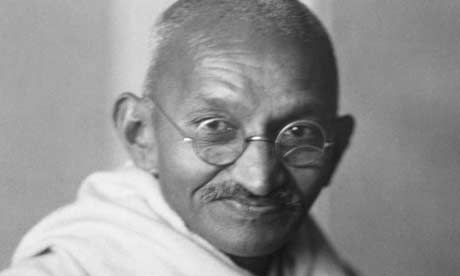
"First they ignore you, then they laugh at you, then they fight you, then you win."

Sunday, April 1, 2012

Mitt Romney, Explained

You had me at Etch A Sketch.
We don't have to wonder about Mitt Romney. Now we know.

(h/t Paul Krugman)

Tuesday, March 27, 2012

Republican Ideological Purity Is the Democrat's Great Opportunity

Katrina Vanden Heuvel and Charles Lane of the Washington Post have drawn a bright line around what ails this country in two recent columns. Van Der Heuvel's is about the source of our moral crisis, while Lane's is an object lesson in why ideological purity -- and the frenzy it sometimes awakens -- can backfire on the very people that endorse it.


First, let's look at Lane's enlightening reminder, his "be careful what you wish for" lesson. In his article, Lane sketches out the history leading to the 2003 Supreme Court decision, Lawrence v. Texas, in which Justice Anthony Kennedy did the unthinkable: He sided with the liberal members of the court to overturn Texas' anti-sodomy law. What led to this case was a fanatical pursuit of sustaining a law that never should have been enacted, one that banned private consensual sex if it was homosexual in nature.

As laudable, from a religious, moralistic perspective, the Texas law might have been -- for its narrow constituency -- its clearly unconstitutional overreach set up a cataclysmic event, the granting of gay rights by the Supreme Court. This in turn set up the more recent successes for gays around gay marriage. In fact, one could easily place the passage of the Texas anti-gay law as the beginning of the march to broader gay rights. How beautifully ironic.

The implications from Lane's cautionary tale are as illuminating as they are refreshing, not to mention, reason for hope. More on that later. Now on to Vanden Heuvel. Her column speaks to the "moral crisis" in America as being cut out of whole cloth by the Republican Party. Here she makes it stark:
The real crisis of public morality in the United States doesn’t lie in the private decisions Americans make in their lives or their bedrooms; it lies at the heart of an ideology — and a set of policies — that the right-wing has used to batter and browbeat their fellow Americans.
They dress these policies up sometimes, give them catchy titles like Rep. Paul Ryan’s “Path to Prosperity.” But they never cease to imbue them with the kind of moral decisions that ought to make anyone furious. Ryan’s latest budget really is case in point. It’s a plan that says that increases in defense spending are so essential, that massive tax cuts for the wealthy are so necessary, that we must pay for them by ripping a hole in the social safety net. The poor need Medicaid to pay for medicine and treatment for their families? We care, we really do, but the wealthy need tax cuts more. Food stamps the only thing standing between your children and starvation? Listen, we feel your pain. We get it. But we’ve got more important things to spend money on. Like a new yacht for that guy who only has one yacht.
There, she put it in a nutshell -- an apt metaphor. The Republican Party is not about freedom, they're about how ideological purity comes at the expense of freedom, that freeing the individual from regulation and taxation comes at the expense of the least of us, the ones who would benefit from community and what community action can bring to the citizens of that community.

Freedom's just another word...
By the way, the number of citizens thrust into that growing cohort known as "the least of us" is alarming, making it all the more inconceivable that the Republicans would push now for changes in tax law and budget priorities that would increase poverty and weaken the safety net originally provided to alleviate it. But that's exactly what the Republicans are doing.

From Lane's thesis -- be careful what you wish for -- and Vanden Heuvel's declaration -- that the current moral crisis stems from Republican ideology becoming a moralistic feeding frenzy -- we can derive a hopeful scenario: The Republicans are hellbent on self-destruction in an election year that seemed to be one of the largest openings for Republican gains in a decade but now seems one of the biggest opportunities for Democrats to define themselves as the party of all the citizens -- the disinclination of the 1% notwithstanding.

Republicans, driven evermore to the right by tea-party types, the Koch brothers, the NRA, Rick Santorum's haughty rhetoric, and Rush Limbaugh's naughty rhetoric will, it's now likely, so fabulously overreach that they'll achieve what they wish for: an ideological purity that attracts the well-established 28% of America I like to refer to as George W. Bush's dead-enders, you know, those frightening people that considered Bush an exemplary president.

Who doesn't this thin coalition attract? Just about everybody else. Their only cause for hope is that Democrats might fail -- as they often do -- at their messaging and that what's left of the Reagan Democrats and the blue-collar Republicans still fall for the line that individualism should trump community even if it reduces many pocketbooks in America to a frighteningly barren place. It may be empty, but it's my pocketbook!

You might not have liked it, but small ball was all I could play.
I'm with those who believe Democratic principles are hollow structures compared to their grander architecture under FDR, Truman, JFK, and Johnson, and though a supporter of Bill Clinton, I do hold him responsible for contributing to the hollowing-out process. But even Clinton drew the line when it came to decimating the middle class to increase the prerogatives of the wealthy. He may have even crafted the best state he could under the circumstances.

But the catastrophe awaiting the U.S. if the Republican dream survives its spiral into purity is too horrible to contemplate. So let's pull together, Democrats, stay on message, and craft that message positively to take advantage of the stumble the Republicans are currently taking. Let's give them their "be careful what you wish for" moment in 2012.

Monday, March 26, 2012

Ben Bernanke as Mighty Mouse

"Where's that nasty old GDP?"
 
Okay, an ancient allusion: Mighty Mouse was a cartoon character from my youth, a prodigious rodent patterned after Superman. Ben Bernanke isn't either of them, but as with Mighty Mouse's famous tagline -- "Here I come to save the day!" -- the Fed chairman knows how to come to the rescue, however brief may be the effect.

In a previous post, I suggested that between the possibility that European and Asian investment money might flow into U.S. markets because their own markets might feel the pinch of slow or negative growth and the likelihood that the Fed would ride herd, so to speak, on our own recovery, there lies the possibility of stable if not up markets through the election.

As if to prove my point -- not an ingenious one, I must admit -- Ben Bernanke did as he was told this morning, causing a triple digit rise in the Dow on an otherwise dismal day. Here's Reuters:
The U.S. economy needs to grow more quickly if it is to produce enough jobs to bring down the unemployment rate, Federal Reserve Chairman Ben Bernanke said on Monday, tamping down expectations of a quick reversal of monetary easing.
Bernanke said the recent decline in the jobless rate, which dropped to 8.3 percent in February from 9.1 percent last summer, was "somewhat out of sync" with the rather modest pace of economic growth.
U.S. gross domestic product grew 3 percent in the fourth quarter, but is expected to have slowed to just below 2 percent in the first three months of this year. For all of last year, it grew only 1.7 percent, which would normally be too slow to move the unemployment rate lower.
Bernanke said the recent drop in the jobless rate could reflect an effort by businesses to recalibrate their payrolls after unusually heavy job cuts during the recession. If this is the case, he said, progress may stall.
Mighty Ben

 So this is how it works. Ben Bernanke senses that the economy will stall because growth won't be fast enough to increase unemployment. He said that the Fed should "remain cautious" as it decides future moves.

Translation: We'll pump money into the system rather than risking the shallow recovery. President Obama's campaign team must be cluck-clucking just as Team Romney must be shaking their heads in dismay, sputtering, "How can we win if America doesn't crash and burn?"

I know, when James Carville famously said, "It's the economy, stupid," he wasn't hoping for a miracle spike in the GDP for ole George Herbert Walker, he was quietly praying for another bad Conference Board report. It's hard to tell the white hats from the black ones.

In this case, however, the good guys, from my perspective, are on the right side of America. Er, I mean left. Also, it may mean we can sit passively by as the election year progresses and pay more attention to politics and less attention to our safe -- for now -- portfolios.

Saturday, March 24, 2012

A Serious Attempt to Get It Right: Impossible?

Rupert, you don't make it easy.
No, it's not impossible. As a matter of fact, the truth of the matter -- whatever the matter -- is often expressed clearly by those who recognize it and share it, and the aptness of a public policy position is studied and clarified daily by some of the best reporters in, well, at least the English-speaking world.

As a matter of habit, I seek out these treatises, essays, blog posts, and articles daily, thanks to the great reading room in cyberspace. The truth is out there and recognizable.

The problem is that these days vast echo chambers exist that drive otherwise capable minds into wells of ignorance, where they repeat the echo until it has the ring of truth -- for them.

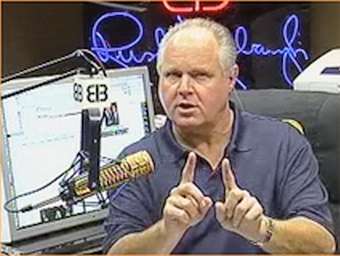
Some might read the above and consider what I say to be an attack, on Fox, the Wall Street Journal, on right-wing radio, on Limbaugh and the rest. They'd be right if it weren't for one thing: these "news" and opinion sources aren't serious outlets. They are operated for a purpose other than pursuit of the truth. The people who don't know this are unaware that they're victims of propaganda. A growing number of people, here and in the UK (think of News International's growing cell-phone scandal), are becoming aware that maybe Murdoch isn't a good guy and that Rush's schtick is very much streaming from the heart of darkness.

Best interests of the country at heart? Hardly.
No, I don't attack these outfits, I recognize them for what they are. Once I hear that point of view, I pivot and check out my sources, my inspirations, so to speak, my oracles. I like to listen not just to those who hold my point of view but to the people who have actually shaped my point of view. I don't come back to the well to be deluded. I come back for sustenance. My choice is based on having learned who makes sense and who does not, on who is reliable, and, face it, it's based on their sharing a very particular vision of mine: They demonstrate an avocation dedicated to helping people, to improving the lives of citizens of every stripe.

Here's who I rely on and why:

Paul Krugman
Paul Krugman (link that helps you past the NYT firewall). Krugman, economist, Princeton professor, and Times columnist and blogger, helps me move past the rhetoric at the intersection of politics and economics, where the real matters of society reside. He's not afraid to call out the zombie liars for what they are. He believes forging the truth in the age of partisan allegiances and artful if insincere messaging is akin to war, and he's willing to fight it. In fact, he feels he owes it to his readers. He links to friend and foe alike, urging us to go see for ourselves. I do so often and come back mostly reassured that Krugman has it right.


aka Duncan Black
Atrios at Eschaton. Atrios, an economics PhD and a former professor, is winning on several points. First, he's downright funny, even when dealing with the most serious of issues, and second, his beat is a mix of politics, economics, transportation and urban issues (he's in Philly), and culture. He gets more bang for the buck from one word than I get from ten. I'm envious. But a day doesn't pass when I don't go to his blog for all it provides. My must-read on the Intertubes (a word he crafted from the late Senator Stevens of Alaska after his mischaracterization of the Internet as a "series of tubes.").


Josh Marshall
Josh Marshall's Talking Points Memo. Josh's blog is one of the oldest around. It was the first blog I started to follow, I think around the beginning of the debate over the Iraq War. Marshall, like a lot of bloggers, is highly educated -- he's a graduate of the Webb Schools in California and Princeton and has a PhD in American history from Brown -- and has a breadth of experience as a "real" journalist. His site has grown into a combination blog/news aggregator, but he's also developed a staff of writers and editors who produce their own reporting. The site is deep and covers politics in all its aspects, from policy to the horse race to the Battle Royal that is modern political theater. TPM produces a regular stream of videos compressing the news of the day -- sometimes an issue, sometimes for a news organization (Fox comes to mind), and sometimes for a campaign (Mitt is very giving in this regard) -- so the site also offers some lighthearted commentary to keep the chill out of the air.


The everywhere man
Barry Ritholtz's The Big Picture. Barry's shop is called Fusion IQ, where he directs equity research, which is available to clients online. Ritholtz, like Krugman and Atrios, accurately predicted the housing bubble and subsequent financial collapse and now dishes up news and opinion not only at his blog but also practically everywhere, from the Washington Post to Yahoo!, CNBC, Bloomberg TV, and more. I don't know how he does it, some days he seems to be EVERYWHERE! He somewhat sticks to a macro view of the markets, but as with other like minds he sees the intersection with politics. Barry's a good soul, but he's got a bare-knuckles style of prose that cuts through the bull. A feature I like is his AM and PM Reads. I picture him laptopping it on his commuter train, reading to and fro. He always seems to find the beef. Solid guy, solid site, and also filled with his special gritty yet urbane sense of humor.


Marcos Moulitsas Zúniga
Marcos Moulitsas' Daily Kos. Another one of the political blogs I discovered early on, Daily Kos is openly supportive of the Democratic Party, though they're not afraid to spank Blue Dogs when they find them. It's long been well past simply a political blog, with great coverage of science, the environment, culture, and society. Kos, as he's called, has created a fabulous resource by allowing one and all to post diaries, some of which are elevated to "recommended" or "community spotlight" status, allowing a depth of reporting, analysis, and opinion unrivaled in the left blogoshere. I regularly post diaries there and am tickled pink by the occasional upgrade. A regular favorite of mine is Bill in Portland Maine's Cheers and Jeers: Rum and Coke FRIDAY! Also, Daily Kos has the most robust presentation of the political universe, regularly chronicling the various races around the country and the inner, day-to-day workings of Congress. Kos doesn't post as much as he used to, but his stamp is still all over the site. Like many bloggers, Kos is well educated, with two bachelor's degrees in Journalism, Philosophy and Political Science from Northern Illinois Univesity and a J.D. from Boston University School of Law. Moulitsas spent his formative years in El Salvador and is a U.S. Army veteran.

For newsy news and opinion, I go to Slate, Huffington Post, and Salon, and of course I have to see what nonsense they're up to daily at the New York Times and the Washington Post. To see my honorable Mentions, just check out my blogroll in the right sidebar. There are actually more sites I rely on and do visit daily, but I've chosen for this post the ones I go to even before the coffee is ready. It's made me a better man, goddamit, and these people help me get it right. Thanks to them, it's not impossible.

Note. It occurs to me that once you get it right -- get your head screwed on straight -- then what do you do? I should explore that in another blog post very soon.

Thursday, March 22, 2012

And Now for Something Completely Different, Again: Investing in the Eurosclerosis Age

He knows what he's doing, right?!?

It's a bit too late for me to act on this recommendation, but that's no excuse to not share it with you. I'm all in money-wise, right now I've got no more. Yet maybe I've already made my plays, we'll see. (Already socked in some high-yields and some cyclicals, etc., fund-wise.)

But...here's the scoop: My first reaction to Europe's Really Bad Horribly Bad Austerity Day was, OMG our stock market is going to tank! Uh, maybe not. How about an alternative scenario?

And...here it is: If Europe's going to austerity itself into a recession (already happening), it doesn't necessarily mean we're screwed in the U.S. Okay, sure, the situation becomes dicey, but, uh, where are the Europeans that can afford to get crazy -- you know who I'm talkin' about, oligarchs! -- going to put all their money? In the Eurotrash bin? I don't think so.

I know, everybody sez it's all global now. But is it? What if smart Europeans say to themselves that maybe now isn't the best time to buy Braun or Daimler or whatnot, especially when we trashing our Euro Zone while America is on the rise? Maybe, the Euro-non-centrics say, wait a minute, I'm throwin' my juice where it might not stink, in America!

Talk amongst yerselves.

Hey, Angela, thanks for the GM tip!

Just to be clear: What I'm saying is that there are reasons to be hopeful that the stock rally that we've had since last fall is not due for a major correction even though conventional wisdom points to one. Not only does the world need some place to put its money and might choose the U.S. because of lowering demand in Europe and Asia, but also there's the fact we're in an election year. Even if the Republicans would like to see us in economic trouble to improve their election chances, institutions like the Fed often make quiet plays to stabilize, even improve markets during election years. QE3, anyone? Or watch President Obama open up the oil reserves to quiet the gasoline market, which also tempers oil prices.

If there is a bottom line, I'd say that the market is due for a long, sideways motion, maybe all the way to November. It's a good time for consolidation and retrenchment, not retreat. So staying in, going for high-dividend, high-yield stocks makes sense. The bond market? I don't know. yields are going up, but prices are coming down. When to buy bonds? Probably when the smoke clears in stocks or after that major correction I'm suggesting won't happen soon. So find a safe way to be 20-40% in bonds. I'm a fan of the Treasury product called I Bonds, which indexes for inflation. Check them out at TreasuryDirect.

I know it's hard to believe, but I've got your back.

Message to GOP: Dance with the People that Brung Ya

Matt Miller of the Washington Post wrote the essential column on the new fiscal 2013 budget proposal of conservative darling Paul Ryan. It's entitled "Paul Ryan's Budget to Nowhere," and it nails the key fabrication of the budget's premise:
Because we can’t keep doing everything for everybody in this country,” [Ryan] said. “We should trim down a lot of other stuff we’re doing.”
This was unintentionally revealing. Ryan has sounded this theme before. “We are at a moment,” Ryan said in his State of the Union response in 2011, “where if government’s growth is left unchecked and unchallenged . . . we will transform our social safety net into a hammock, which lulls able-bodied people into lives of complacency and dependency.”
But what hammock is Ryan talking about? The only thing slated to grow the size of government in the years ahead is the retirement of the baby boomers. The doubling of the number of people eligible for Social Security and Medicare is what is driving all the increase in federal spending — along with the spiral in system-wide health costs, which afflicts Medicare along with all privately financed health care.
If those programs for seniors haven’t been a “hammock” until now, simply doubling the number of people eligible for them can’t turn them into a “hammock” tomorrow. When it comes to fiscal policy, we have an aging population challenge, and a health-cost challenge. We don’t have a “hammock” challenge.
That's the key to understanding just what the GOP attack on American citizens is: It's not what it purports to be. Most GOPers repeat the meme that "we will transform our social safety net into a hammock" when what they really want is to take away the services that have existed for generations and have been paid for by the very participants that need them and have earned them at exactly the time they are set to receive them -- retirement. Retirement may indeed be a "hammock," but it's intended to be. It's meant to be that moment when the body, usually already starting to fail a bit, gets to rest, refresh and be attended to after forty years or more of labor.

And this moment in time has been paid for by a lifetime of social security and Medicare taxes as part of a social contract: You pay into the fund, and when it's your turn, you get to rest, relax and enjoy what time you've got left. What does the Republican Party want, an extra decade of work, often in pain and diminished capacity -- especially for those who've worked with their hands and their backs -- just before the folks croak? In a word, yes.

Why? So that we can cut taxes on the wealthy even though we've been cutting taxes on the wealthy for the better part of thirty years? Yes.

So that we can continue to fund wars that have been sucking our blood and treasure without apparent success or efficacy or real rationale? Yes.

Heaven forbid we should cut defense spending in order to meet our contractual obligations to our citizens.

I could go on, but this isn't meant to be a line-by-line analysis of Ryan's budget, which in any event is impossible because there is no line-by-line there anyway. As with many GOP proposals there's just an "end Medicare and Medicaid as we know it and while we're at it raise eligibility age on all social programs and change the COLA calculations so that benefits go down even though those doing the actual math point out that this actually raises costs" proposal that protects defense spending, massively cuts taxes on the wealthy and corporations while not spelling out the other areas of cuts required to get us anywhere near a balanced budget.

No, Ryan's proposal isn't a serious one, it's just a bomb being lobbed into the the public sphere to set up the messaging of Ryan's cohort. Pure and simple. That's his job. Conservatives can now cite Ryan's plan as if it's an authoritative study upon which to draw. It's not, but that won't stop the Jon Kyles, Tom Coburns, and John Boehners from saying things like "Paul Ryan's the first Congressman to have the courage to admit that our present spending is just not sustainable." Right, it isn't, especially if we continue to cut off the sources of revenue we've been using for taking care of our citizens.

Matt Miller points to what really happening: The baby boomers are going to retire in record numbers at a time when we as a nation are failing to control healthcare costs. In other advanced nations, populations are aging, as well. They are, however, more prepared to deal with the crisis because they've already made the commitment to single-payer healthcare and are thus in better control of costs. Only in personal-responsibility-obsessed America are we definitely screwed. Why? Because even though our citizens have been paying into the system all of our lives, personal responsibility ends at the legislature's door.

To be fair, I need to mention a key exception among advanced nations: the austerity-crazed Tories in the UK who are wreaking havoc on their economy with lower taxes, savage cuts, and plans to privatize its reasonably well-functioning healthcare system. Currently the Tory experiment has thrown the UK back into recession and actually expanded deficits, as most non-partisan economists warned would happen. But that's another, if compelling, story.

No one among the U.S. citizenry are asking for a bigger, better hammock. They're only asking for the hammock they paid for. But the perilous experiment in the UK might be pointing to a greater truth, that trimming government spending while cutting taxes will bankrupt the country, leading to a downward spiral of services to the public and protection of the infrastructure that has underpinned the economy to begin with.

Once the elderly lose their autonomy and their healthcare protection, someone has to pay for it, and historically that's been the children. When that happens the whole society will begin to spiral down, as housing costs and medical bills are borne by subsequent generations. Then the middle class, already under assault, will be decimated.

Only the wealthy will be left standing. Hummh. I'm beginning to understand Paul Ryan now. I wish millions of so-called middle-class, blue-collar Republicans would figure this out in time. Sorry to be cynical, but fat chance.