Saturday, November 9, 2013

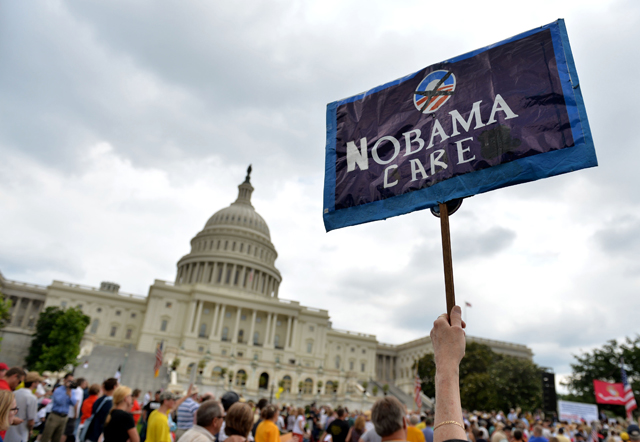
The Trouble with Obamacare, Ad Nauseum


Thinking of the myriad troubles and disappointments of both the substance and rollout of the Afordable Care Act, I'm reminded of a joke I discovered recently:
Jean-Paul Sartre walks into a Paris cafe, sits down and says to the waitress, "I'd like a coffee with no cream."
The waitress replies, "We have no cream. Would you like one with no milk?"
The joke, a very inside one it seems, depends on understanding Sartre's basic tenets. I suppose that one of his major works is titled Being and Nothingness might be a reasonable tell.

In any event, it suggested to me where the ultimate failure, or flaw, lies with Obamacare: It either lacks cream (a public option) or milk (a stronger individual mandate).

One could argue that it's not being a single-payer, Medicare-for-all program is its most egregious failing, but what's germane is what would have been possible in 2009 given the political realities. Progressives could have held out for a public option -- if blue-dog senators could have been swayed -- or in the face of stiffer red-state Democrat resistance at least a stronger individual mandate, such as requiring more forceful, more immediate penalties for opting out of insurance.

From a business/market perspective, removing the private-insurance model from health care altogether would be the no-cream version while much more strictly regulating insurance coverages might be the no-milk variant.

Yes, this is just an exercise in examining the limitations of American politics in an age of ultimate ideological stalemate. But it also demonstrates the limits of bipartisan compromise: Proposing a bill that guarantees automobile safety by lowering the speed limit to zero won't get us anywhere. And "throwing the red states a bone" by eliminating the seat-belt requirement wouldn't sweeten the deal enough for passage.

Progressives need to learn that compromise -- something only progressives seem to do these days -- usually lands them not in the middle but instead in some dismal no-man's land.

Sweetening the Affordable Care Act by eliminating the public option amounted to giving us the Obamacare we deserve. And for someone who likes cream in his coffee, the outcome may be pretty black indeed.


Footnote. I'm not saying that Obamacare won't or can't improve the health-care system in the U.S. The point obviously is that it could have been so much better were it not for "political realities." And what we're left with has enough challenges to drag us down for years before we reap what benefits are actually in store. In the meantime, can we count on overcoming the obstacles the right is throwing in front of us on the way to a successful, long-term rollout? We won't know that for a while, either, hence the dark outlook.

Letting the States Be the "Laboratories of Reform"

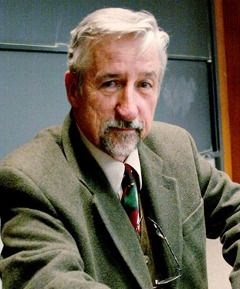
Tom Hayden, born of the
anti-war movement of the 60s.
Daily Kos pointed me to this article by longtime California progressive Tom Hayden, lately of The Peace and Justice Resource Center. In it Hayden touts the advantages of progressives turning the tables on red states, which claim "states' rights" to be the special province of right-wing, culture-warrior prerogatives and shows how California under Governor Jerry Brown has often struck the right balance in moving the state towards a modern model of a government that serves the needs of its people. Hayden:

Governor Jerry Brown is finding California to be an effective Archimedean leverage point in shaping a progressive alternative to a federal system stalemated by the New Civil War.
The latest example is a West Coast pact to combat climate change by the governments of California, Oregon, Washington, and British Columbia, a region populated by 53 million people with a GDP of $2.8 trillion.
The plan will produce energy savings, green jobs and greenhouse gas reductions, and will exploit any new Obama emissions standards that will eliminate new coal plants. California also will soon forge a carbon-reducing trading market with Quebec. The growing clean energy bloc will pressure for adoption of a new global energy agreement in 2015. 
California created similar leverage by adopting energy efficiency standards and renewable energy incentives in the Seventies, when America was paralyzed by Detroit's political monopoly over transportation policies favoring gas-guzzlers. At least fourteen states, led by California, formed an alternative energy bloc that resulted in greater fuel efficiency, consumer savings and domestic manufacturing jobs.
Governor Moonbeam no more?
I found it telling that Hayden has adopted language I introduced in my blog over a year ago -- not suggesting I thought of it first! -- mostly because I find the model helpful in understanding the behavioral aspect of the political fracturing of America brought on by the election of Barack Obama. And it's telling that Jerry Brown has, on a large scale -- California's is the ninth largest economy in the world -- helped shape a nation-sized set of reforms that hints at what an American-style progressive state can provide its people. In turn, California can set standards for other states to follow, not something new as demonstrated over the years by the leadership the state has provided on energy and conservation issues, marijuana decriminalization, and marriage equality.

California's road to reform has been choppy at times and not always progressive, as Hayden points out:
The truth is more that California politics today have evolved through the very snares that are causing national politics to be so broken. Today's right-wing insurgency symbolized by the Tea Party began its virulence with the Prop 13 voter revolt against property taxes in 1979.  Today's anti-immigrant phobia arose with Pete Wilson's TV commercials of immigrants racing across the border, and with Orange County politicians sending sheriffs to inspect polling places for voter fraud by Latinos. California gave America the Three Strikes crusade. Californians threw out three competent and qualified state Supreme Court judges on the grounds that they were soft on crime. California's LAPD created the national model for SWAT teams and riot control.
As a Californian, I now feel comfortable in the liberal bastion of the San Francisco Bay Area. Yet California as a whole has been far from a progressive's dream over the decades, as the agricultural and rural regions harbor deep-seeded conservative and libertarian impulses perhaps dating from the Oklahoman migrations of the 30s. Remember, California elected Arnold Schwarzenegger twice in the last decade (he left office in 2010!).

Hayden points out that Jerry Brown has learned to balance these divergent interests in ways a younger Jerry Brown had failed to do:
Brown's initiatives are far from perfect, of course. His climate change policies have failed to address fracking beyond moderate regulatory adjustments. His law-and-order approach helped fuel mass incarceration, and he refused to lift a finger, at least publicly, when hundreds of inmates went on hunger strike against brutal conditions of solitary confinement. Those failures only show that social movements have more pressure work ahead, since Brown is careful about positioning himself too far in front of public opinion. The opposition to fracking will only grow when more Californians in the Monterrey Shale region are impacted, as happened with homeowners all across suburban New York. And Brown may turn to prison reform once his court appeals are turned down for a final time, which is likely to be soon. Then he can blame those judicial mandates for any reforms he adopts while running for re-election next year. Politics is an ugly world, but that's what they have confessionals for.
Yes indeed. Still, I'll gladly vote again for Brown should he -- as people expect him to do -- run again in 2014. I might not like everything we get from a "careful" Jerry Brown, but he has built a government that functions, often in a progressive way. I'll take that any day.

Rick Perry's Texas: What kind of "laboratory" are they forging down there?

Read Hayden's whole piece. It offers a view of what progressivism can do state-by-state, even in today's uneven, uncivil political climate.

Friday, November 8, 2013

S&P in Bed with the Very Serious People? Paul Krugman Thinks So

Paris, Boulevard St. Germain, where the French sip coffee and
worry about what Standard & Poors thinks of their socialism.

And, from my perspective, Krugman proves it. From today's blog:
So S&P has downgraded France. What does this tell us?
The answer is, not much about France. It can’t be overemphasized that the rating agencies have no, repeat no, special information about national solvency — especially for big countries like France. Does S&P have inside knowledge of the state of French finances? No. Does it have a better macroeconomic model than, say, the IMF — or for that matter just about any one of the men and women sitting in this IMF conference room with me? You have to be kidding.
Krugman then, using two graphs of data, demonstrates, quite conclusively, that the UK is underperforming France, economically speaking. Yet the Brits are the darlings of the Very Serious People because they've talked and walked the austerity path, which not surprisingly has led UK to undergo a double-dip recession. But, hey, everybody knows austerity is expansionary!

France has itself double-dipped, but a case can be made that the eurozone did that to themselves with the austerity it has forced on its suffering periphery, i.e. the PIIGS.

No, Paul's right. France raised taxes to preserve their social safety net. S&P sleeps with the ideologues that think destroying the safety net shows how Serious you are.

At some point we'll stop listening to the ratings agencies. I stopped back when they were rating subprime-mortgage-backed securities AAA.

Do check out Krugman's data. It's striking.

Update. Fans of Atrios know he's good at coining phrases of merit, like "Very Serious People." Krugman's famous one is the "confidence fairy," meaning what will show up and stabilize the markets if we'd only slash Social Security and Medicare, which, of course is what DC's Very Serious People advocate. Because they're ready to "take tough measures."

All of this is actually pretty grim, but Krugman's in Yurp giving a talk to the IMF, so he flags this picture, apropos of catchy turns of a phrase. Don't miss it. Enjoy.

Thursday, November 7, 2013

The Dolphins' Hazing Incident Punches a Hole in the NFL Machismo

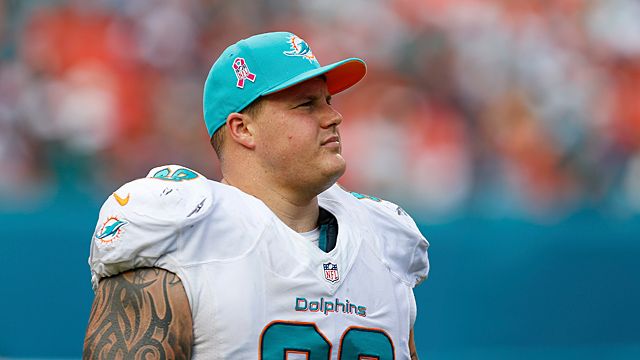
Richie Incognito: Today's NFL? Tomorrow's NFL?

The American Human isn't dedicated to sports, although I like a good game as much as the next sports fan. Back in the day, going to a 49ers game was better than Disneyland.

Football is rapidly devolving into a "dudes signed up for this shit so what?" enterprise. And I understand that it's not insane to say that about athletes/entertainers who bet that the millions are worth it against the chance that they'll end up one of the losers.

But when the curtain is pulled back and what we see is the undeniable cruelty of a man like Richie Incognito, then we've got to wonder if we who provide the millions for these Neanderthal "warriors" aren't culpable. Hint: we are, we bloodthirsty bastards. Again, many will say "so what steroids and hard hits are part of the game get over it."

But Brian Phillips of Grantland says it better than I ever could:
Warriors make war on warriors. There's no room for crying in this game. You have a problem, you handle it on the field. Handle it as a man. Go down swinging. I hear you, NFL, and that's why I'm not here to move you or persuade you. If you have a penis and feelings, you'd better cut one of them off. I'm here to start a fight.
Because this — this idea that Jonathan Martin is a weakling for seeking emotional help — this is some room-temperature faux-macho alpha-pansy nonsense, and I am here to beat it bloody and leave it on the ground. Every writer who's spreading this around, directly or by implication; every player who's reaction-bragging about his own phenomenal hardness; every pundit in a square suit who's braying about the unwritten code of the locker room — every one of these guys should be ashamed of himself, and that's it, and it's not a complicated story.
 Read the whole thing. It's right on and some of the best sports writing I've read since I don't remember.

Sensible Reforms We Should Make Now, But...

The Times' Joe Nocera
...who knows if we'll make them. However, Joe Nocera, NYT columnist offers some clear-eyed thinking about how to be a better republic. And, boy, is there room for improvement:
  • Move elections to the weekend.
  • Term limits for the Supreme Court.
  • Open primaries.
  • End gerrymandering.
  • Bring back the small donor.
I thought I liked lifetime appointments to the Supreme Court, but Nocera's right: It encourages nominating the youngest, stealthiest candidate a president can find; then the country lives or dies by it for decades. And, yes, it leads to a form of agism. Why not be able to appoint short-term wisdom instead of always going for the long-term, high-stakes political game?

When California went to the open-primary system, I was uncomfortable with it. Nocera points out that open primaries might prevent extremists like the tea party candidates from wagging the dog so much. Republicans will nominate more moderates if an internecine fight looks to knock them out altogether. That's already happened in CA.

These reforms can start on the local or state level. Why not get started?

Wednesday, November 6, 2013

A New, Progressive Agenda for Democrats to Pursue Fearlessly

During my childhood, which centered around the 50s and early 60s, the U.S. was mired in the Cold War, that is, I played baseball, pretend war, pretend cowboys and Indians, dug forts, loved fireworks, listened to rock 'n' roll on the playground on my transistor radio, went to school, played marbles, had "girlfriends" (girls that didn't mind me hanging around longer than 15 minutes), and generally assumed my parents would keep me clothed, fed, housed, safe, and with enough Christmas presents under the tree to not feel poor, or at least not horribly outclassed by the families with the two-car garages and split-level homes -- meaning we had nuclear war drills, were amused and confused at the notion of bomb shelters and then went back to playing baseball and cowboys and Indians.

In other words, Ike was president, the playgrounds and pastures of Colorado seemed endless and sufficient, and the U.S. was huge and inviolate. We went to the doctor and dentist when we needed to and most people I knew lived middle-class lives without really thinking about the poor or the rich, which seemed distant and trivial distinctions.

Why do I introduce this vision as a prelude to a hearty, fearless progressive agenda? For a serious reason: Dwight Eisenhower, hero of WWII, was practically a socialist when compared to the Very Serious People of our political classes, which explains, partly, why our current crop of liberals are so silent and limp when it comes to standing up to the Republicans and the moneyed elite.

The other reason is many Democrats are in thrall to the moneyed elite, as well. But they needn't be. They all remember having fresh milk waiting in the milk door in the kitchen, three square meals a day, good schools to attend, and that general feeling that they'd all have that when they grew up. And, generally, they did. They -- both progressives and conservatives -- know what a good, reliable, stable society felt like.

That was then, and this is now. Progressives still remember, and conservatives have either forgotten or switched to the dark side, by which I mean they've bought into the libertarian line or sold out to the moneyed elite by basing their agenda around making the rich richer in hopes of moving up to the upper classes themselves, something which most of them have accomplished. Okay, some of the progressives have, too, but they at least provide lip service to the needs of the middle and lower classes.

So, here we are. Why would Democrats pursue a fearless progressive agenda all of a sudden? Because it's tremendously popular across an extraordinary collection of groups, that's why! And it has a fabulous, very compelling likelihood of being extremely successful politically while being extraordinarily good for the country.

What would that agenda be? Simple:
  1. Embrace entitlements, more properly known as social support programs, social insurance, or the safely net. Who should benefit by these social programs? Everybody. Therefore, we should:
  2. Expand Social Security. Make its COLAs larger, not smaller. Make it solvent by gradually increasing the cap in payroll taxes from the current $113,500 over time until the system is stable for at least 75 years. Expand the Social Security Disability program until it is easier to qualify for, not increasingly difficult for anyone to qualify for. Let's take good care of our most vulnerable citizens.
  3. Expand Medicare, slowly over time, until it covers everyone, even our undocumented workers. A health workforce is a productive workforce and is excellent for business. (The possibility of more contented people is not shabby, either.)
  4. Expand public education to include universal preschool and daycare with licensed, educated teachers and practitioners. Healthy, well-educated, well-fed children don't suffer the stress and malnutrition that guarantees an underperforming bottom quintile or so forever.
  5. Raise the minimum wage to a living wage, say, $15. Why should minimum-wage workers need welfare to get by when that's at the taxpayers' expense and only guarantees corporations higher profits? Where's the sense in that?
  6. Guarantee human rights to all classes of people in the United States. Tell me, who do you wish to discriminate against? Who? Blacks? Hispanics? Women? Gays? Poor people? People in bad health? Veterans? Christians? Muslims? Jews? Who? Right. Then don't, simply don't allow discrimination against anybody.
  7. Secure our borders. Fine, but don't shoot anybody to do it (unless there are clearly armed interlopers or confirmed terrorists with bombs, etc.). How about this as a working philosophy: Americans don't shoot anybody unless they absolutely can't make people safe without doing it. By that I mean police in our cities, towns, and rural areas, too.
  8. Favor gun control and greatly reducing access to assault weaponry. Don't run from this issue. Be fearless. Guns make us less safe, and every study shows this. Large majorities favor sensible gun control, and that includes registration, databases, and whatnot. People want guns controlled and off the streets.
  9. End or massively reduce the War on Drugs by changing it from a legal problem requiring imprisonment into a public-health problem requiring treatment. We have not just lost this war, it's killing us. And it's hasn't helped our Latin-American friends either (to wit, Mexico and Colombia, to name two).
  10. Reforming congressional rules and practices until the legislative process makes sense to people and has a chance of being productive once again. Americans want this. They want to trust their governmental processes again. They want to believe that government by the people for the people is not just possible but the way we do business in government.
There you have it. I could have forgotten something or could have tailored the explication in a more concise way. But this is a start, and we progressives should be shouting it from the rooftops, getting shrill about it in our blogs, newspapers, and magazines, and emailing our politicians about it non-stop. Our United States will be better off, substantially better off if we did.

More later, much more.

Ken Cuccinelli Aside, This Is Creepy -- and UnAmerican

Well, maybe it is state-of-the-state American nowadays. It certainly echoes soon-to-be-former VA Attorney General Ken Cuccinelli's fascination with anuses:


The Constitution is more than under assault. It's broken. At least in states like New Mexico and the Sun Belt. May the law-enforcement hysteria someday stop.

Footnote. The point of calling attention to a decision of the Court that weakened the 4th Amendment is that the decision prevents magisterial mistakes from causing the exclusion of tainted evidence, e.g. a judge issues a warrant in error and the courts can use the evidence in prosecutions anyway (judge: Oops, my bad! Have a nice time in prison!). And, I would imagine, protects judges, police officers, and doctors from civil suits and damages, e.g. the judge issued a warrant so it was okay to probe your anus for several hours even though it turned out we dragged you into a hospital for nothing. Bygones!

Also, too, the War on Drugs inspires this wacky pursuit of justice, with its untrained, unproven canines "alerting" to a driver's car seat, hence eight invasive, inconclusive medical procedures on a guy who glided through a stop sign (or failed to signal a turn)? Jeez...