What a weekend! We learned on Friday that the markets loved the European Union's decision to more fiscally unite -- sans the UK -- to, ah, do what exactly? Well, no one really knows, so the markets are tanking today. Where will it end? In a global recession if our German and French Overlords have anything to do with it.
And then there were Six: as Herman Cain departed the debate stage and Jon Huntsman was considered too marginal a candidate to include. What did we learn from the Saturday ABC Republican primary debate, other than that ABC sucks at moderating debates? Well, we learned that Obama is 100% wrong on everything. Wow. Who would have thought Obama was going to have a perfect score of zero?
Our political process is not polarized, of course. Anyway, another thing we learned was that Mitt Romney is in trouble and Newt Gingrich is not. Is anybody else in trouble? One guess. (Hint: it's not who you think.)
Steven Van Zandt had a great post on the Huffington Post this morning. Yes, our democracy is broken because campaigns are financed by unlimited, unregulated cash, thanks to the Citizens United decision and, according to Van Zandt, Buckley v. Valeo, a case I was unfamiliar with. It turns out that Buckley was the case where the Supreme Court put forth the notion that money is, essentially, free speech. Yikes.
The implication is, of course, that the wealthy can afford more free speech that the poor, and that's okay!
Finally, Paul Krugman warned us that we are in a depression and democracy is under siege in Eastern Europe. Hungary, apparently, has an upsurge in far-right support, with attacks on Roma (gypsies) and a rise in anti-Semitism. And Austria is up to its old tricks, with the popularity of Hitler on the ascendent. Yikes indeed.
When you add it all up, it was not a very good weekend, even if the Giants beat the Cowboys.

Monday, December 12, 2011

Tuesday, December 6, 2011
Ne'er-Do-Wells, Has-Beens, and Freaks

Go ahead, call me out on it. The Republican presidential field is populated by those in the title. Go ahead, explain yourself before you call me out.
We have an historical flow -- not one the perfesser Newt might grok -- from, well, how far do you want to go back?? Let's use Ford as a demarcation line. He's a built-in lame duck following the scourge that was the Nixon presidency, and never himself elected or worn out. He just passed through.
Carter was called upon to be transformative, and, frankly, sans hostage crisis, might have been. People in the know (an assemblage, then, of non-dickheads ready to tell the truth) remember rightly that he modernized the armed services and established cutting-edge energy policies that were years ahead in wind and solar.
Reagan was someone who is lionized by the right but, when judged by people in the know, was essentially a pleasant man who tripled our national debt by cutting taxes too much -- and presided over a major transfer of wealth to the wealthy away from the middle class. His time was known as the "me generation" and a certain precursor to the 99% movement today.
Bush I, well, he was establishment all the way. He was a bold and decisive war leader, sort of "an invader before invading was cool" kind of guy. If he had a clue how to communicate like the Gipper, he might have made a decent second-term president. After all, he knew how to raise taxes when you just had to, so he did, and became toast in the bargain. Precursor to the curse of the wild, untamed Norquist? Maybe.
William Jefferson Clinton, WTF. Brash, full of ideas -- like Gingrich (GASP!!) -- but with the nimbleness and foundation to be a real man of ideas. Case in point: WAY ahead on teh gay, WAY ahead on health care reform, seriously good commander-in-chief -- if you favored butting heads with smarmy Balkan dictators AND not losing an American life in the process while advancing the cause of democracy while helping to sort out the post-Soviet era. Okay, dick-for-brains who balanced the budget and then some. Negative: Rubin, ending Glass-Steagall, being in favor of middle-school uniforms, eh, what's with the small ball?? And did I mention dick-for-brains, occasionally literally? Ended up very popular, still is.
George W. Bush, what's to say? The polls still tell it: he was really bad, so bad we elected a black man, that's how much we wanted as a nation to distance ourselves from the stench. I've lived a long time, and I don't remember an ex-president disappearing like him. Why? No one wants to listen to him in this country, and he's afraid he'll get arrested and delivered to the International Criminal Court if he travels, that's why. Example: can you imagine him going to Spain? Huh! Switzerland couldn't vouch for his safety, so he canceled.
Obama? Ask Glennzilla, as Atrios calls him, and we'll all agree that his Justice Dept. sucks (fill in the blank with paraphrasing from The Exorcist's best line), his war policy was too tough, and his cow-towing to conservatives in the guise of reasonableness (read SUCKER) was foolhardy when talking liberal-tough would have done the trick while on message and also showing some balls (can't hurt!). Oh, and his health care law was okay if weak tea to the liberal wing. Still, how much could he have gotten? I'll never know but happy for what he got.
Okay, NOW, we get to the present: what's the deal with the ne'er-do-wells, has-beens, and freaks we got in the GOP primary? Who among us, liberal, conservative, libertarian, and
Talk amongst yourselves, Dems, Repubs, moderates (what the hell is a moderate? Oh yeah, a Dem), and others. None of us like them, regardless of how we feel about Obama. Go ahead and admit the truth. You're screwed if you vote for them, we're screwed if too many vote for them.
Final thought: Don't you just love how Yahoo! Finance runs all kind of stories about the best places to retire abroad? I didn't so much, but now I'm reconsidering...
Update: Rolling Stone just seconded my call with a "The GOP's Crackpot Agenda" article. Nice.
Update2: Boy, I forgot Paul Krugman's take on Monday.
 |
| Dream team or nightmare? (glad I don't have to decide) (Oh, guess I did) |
Sunday, December 4, 2011
The Heart of the Matter
 |
| Irving Fisher, 1867-1947 |
The following is "tentative conclusion" no. 11 from Irving Fisher's paper entitled "The Debt-Deflation Theory of Great Depressions," 1933. (h/t Paul Krugman)
But the exact equilibrium thus sought is seldom reached and never long maintained. New disturbances are, humanly speaking, sure to occur, so that, in actual fact, any variable is almost always above or below the ideal equilibrium.
For example, coffee in Brazil may be over-produced, that is, may be more than it would have been if the producers had known in advance that it could not have been sold at a profit. Or there may be a shortage in the cotton crop. Or factory, or commercial inventories may be under or over the equilibrium point. Theoretically there may be—in fact, at most times there must be—over- or under-production, over- or under-consumption, over- or underspending, over-or under-saving, over-or under-investment, and over or under everything else. It is as absurd to assume that, for any long period of time, the variables in the economic organization, or any part of them, will "stay put," in perfect equilibrium, as to assume that the Atlantic Ocean can ever be without a wave.Fisher then goes through a number of observations in which he offers the opinion that these "disturbances" just enumerated can only account for "small disturbances" and all of them put together cannot adequately explain "big disturbances."
He gets to the heart of the matter in conclusion no. 19:
I venture the opinion, subject to correction on submission of future evidence, that, in the great booms and depressions, each of the above-named factors has played a subordinate role as compared with two dominant factors, namely over-indebtedness to start with and deflation following soon after; also that where any of the other factors do become conspicuous, they are often merely effects or symptoms of these two. In short, the big bad actors are debt disturbances and price-level disturbances.
While quite ready to change my opinion, I have, at present, a strong conviction that these two economic maladies, the debt disease and the price-level disease (or dollar disease), are, in the great booms and depressions, more important causes than all others put together. [all boldface type mine.]There's no doubt in my mind this analysis nails the cause of our current crisis: the over-leveraging of the big banks, partly for speculative reasons and partly through the selling of dicey mortgage-backed securities in order to keep the housing gravy train running. There's your debt disease. This led to over-leveraged home owners who bought homes in a market seriously suffering from price-level disease.
I then tried to work backwards and ran into a does-not-apply on the recession of 2001 from the deflating of the dot-com bubble. But Fisher to the rescue again, as his no. 20 speaks directly to what happened:
Some of the other and usually minor factors often derive some importance when combined with one or both of the two dominant factors.
Thus over-investment and over-speculation are often important; but they would have far less serious results were they not conducted with borrowed money. That is, over-indebtedness may lend importance to over-investment or to over-speculation.
The same is true as to over-confidence. I fancy that over-confidence seldom does any great harm except when, as, and if, it beguiles its victims into debt.Makes sense to me. The problem with the dot-com bubble was the combination of over-investment and over-confidence. Perhaps the reason it was such a soft recession was that a lot of capital was venture capital that was not borrowed, thus there wasn't so much over-leveraging.
The other really mean recession, the 1981-82 disaster, was caused in classic fashion by the Fed driving up interest rates until it crashed the economy in order to get inflation back under control.
Now, I'm not an economist no matter how fascinated I am with the subject. But it seems clear to me that we've got the price-disease under control: the bottom has fallen out of the housing market, and the correction is well past the half-way mark. The damage, though, is far from over. A good portion of the lingering recession rests on low aggregate demand, as new household formation is so slack that no one needs houses, or construction, or furniture, appliances, etc. The part of GDP that is home-financing-based is also slack, as very little lending is yet underway.
Now what's especially germane, as far as I can tell, is the view of what to do with the debt. And that's where the paradox of thrift comes in. Roughly speaking, what is saved or used to pay down debt is not spent on goods, thus thriftiness causes a lack of economic activity, which then leads to lower demand and higher unemployment.
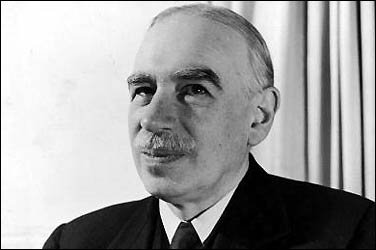 |
| John Maynard Keynes, 1883-1946 |
Therefore, when you've got a national, even world, economy coming out of a serious financial crisis caused by a toxic blend of over-leveraging, over-indebtedness, and price-disease, one of the worst things you can do is create a massive drop in aggregate demand on purpose and expect any good to come of it.
We don't know why the British and the Germans insist on it happening in the UK and the eurozone. We do know that expansionary austerity has all the characteristics of a zombie lie in that the paradox-of-thrift factor alone when applied to government revenues (as in money-not-spent --> lower revenues --> higher deficits --> higher debt) would be the very definition of a vicious circle.

What's more, they've done everything they can to drive the country into a ditch, and when they had a chance with the Super Committee to really lower the deficit, they didn't do it, and in fact, they've come out of the failure of the Committee demanding that we don't make any of the defense cuts in the sequestration deal but are mum on the Medicare cuts.
 |
| We haven't passed any legislation since the Stone Age, I mean since Bush. |
How do we know this? Whenever, and I do mean whenever, reduction of spending on Social Security and Medicare is discussed, it's also discussed with "broadening the tax base," which is blatant code for lowering taxes on the wealthy and raising them on the poor and middle class, under the guise of "everybody should pay something." That's already true -- in that everybody already pays some taxes -- and everybody knows it.
What's also true? This is all being done because the wealthy pay the tab for the pols, who preform like trained animals, to the detriment of the truly needy in our society, with a lot of collateral damage to the ever-shrinking middle class.
Ugh.
The Accomplishments of Newt Gingrich
Here is an exhaustive list of Newt Gingrich's accomplishments:
?
Thank you.
I suppose we owe him more than that. So here goes:
Newt Gingrich did obtain a PhD in History from Tulane University. He became an assistant professor of history at West Georgia College in 1970. He switched to the geography department in 1974. After being refused tenure, he left the college in 1978.
He lost two runs for the House but won on the third attempt in 1978. He won a number of terms in the House until he quit in 1998 after the election loss. He has served in government only in the House.
He was elected Minority Whip in 1989 and the Speaker of the House in 1995.
He was a co-author of the Contract with America, though most of the ideas came from the Heritage Foundation and he was not the lead author. Few of the ideas in the Contract made it into law. One, welfare reform, was enacted in cooperation with President Bill Clinton.
Gingrich, as Speaker of the House, led House actions that caused two government shutdowns during the Clinton years, leading to a diminished Republican Party, which lost the House in 1998.
He was charged with 84 ethics violations, some of which he admitted in 1997, which led to a $300,000 fine.
After the ethics investigations and the loss of Republican control of the House and Senate, after four years in power -- and a botched challenge to his leadership -- he resigned both his Speakership and his House seat.
In the next thirteen years, he made an estimated $100 million NOT LOBBYING Congress.
Part of that time he spent with his Center for Health Transformation. He was against Mitt Romney's Massachusetts health care reform and Obama's health care reform, the only significant reforms enacted since his Center was founded. He did not lead any action that led to any health care reform.
Okay, now, what did he do? What did he accomplish? Mind you, Lady Gaga had three platinum records in the past three years, with total sales, between albums and singles, in excess of 40,000,000 units. Now, I like Lady Gaga well enough, but that's not the point. This is what she's done since 2008, during the Great Recession. And she's 26, and it appears that she's driven most of her own success.
Now, what has Gingrich done, again?
Shut the government down twice (didn't work) and limited poor people's access to government money through welfare reform. And got denied tenure. And DIDN'T LOBBY (while making $100 million doing nothing). And got hounded out of Congress for ethics violations and, well, sucking at leadership. And created a Center for Health Transformation that has contributed, ah, ????
Oh, I forgot his major accomplishment to date: managed to become the leading candidate for the GOP nomination for president in 2012.
To quote Steve Jobs' last words: wow wow wow
?
Thank you.
 |
| I'm going to fundamentally, extraordinarily, surprisingly, change (what was I talking about?) |
I suppose we owe him more than that. So here goes:
Newt Gingrich did obtain a PhD in History from Tulane University. He became an assistant professor of history at West Georgia College in 1970. He switched to the geography department in 1974. After being refused tenure, he left the college in 1978.
He lost two runs for the House but won on the third attempt in 1978. He won a number of terms in the House until he quit in 1998 after the election loss. He has served in government only in the House.
He was elected Minority Whip in 1989 and the Speaker of the House in 1995.
He was a co-author of the Contract with America, though most of the ideas came from the Heritage Foundation and he was not the lead author. Few of the ideas in the Contract made it into law. One, welfare reform, was enacted in cooperation with President Bill Clinton.
Gingrich, as Speaker of the House, led House actions that caused two government shutdowns during the Clinton years, leading to a diminished Republican Party, which lost the House in 1998.
He was charged with 84 ethics violations, some of which he admitted in 1997, which led to a $300,000 fine.
After the ethics investigations and the loss of Republican control of the House and Senate, after four years in power -- and a botched challenge to his leadership -- he resigned both his Speakership and his House seat.
In the next thirteen years, he made an estimated $100 million NOT LOBBYING Congress.
Part of that time he spent with his Center for Health Transformation. He was against Mitt Romney's Massachusetts health care reform and Obama's health care reform, the only significant reforms enacted since his Center was founded. He did not lead any action that led to any health care reform.
 |
| Newt's all right. He was born that way. |
Okay, now, what did he do? What did he accomplish? Mind you, Lady Gaga had three platinum records in the past three years, with total sales, between albums and singles, in excess of 40,000,000 units. Now, I like Lady Gaga well enough, but that's not the point. This is what she's done since 2008, during the Great Recession. And she's 26, and it appears that she's driven most of her own success.
Now, what has Gingrich done, again?
Shut the government down twice (didn't work) and limited poor people's access to government money through welfare reform. And got denied tenure. And DIDN'T LOBBY (while making $100 million doing nothing). And got hounded out of Congress for ethics violations and, well, sucking at leadership. And created a Center for Health Transformation that has contributed, ah, ????
Oh, I forgot his major accomplishment to date: managed to become the leading candidate for the GOP nomination for president in 2012.
To quote Steve Jobs' last words: wow wow wow
Friday, December 2, 2011
Newt Is No Newton
 | |
| "I want to fundamentally, profoundly change the way you remember me from the 90s." |
Well, technically, he is. He was born Newton Leroy
Let's stipulate that Newt Gingrich is not dumb. But the meme that's been living a long and prosperous zombie life that he is "one of the leading intellectuals of the Republican Party" is utter nonsense. His profusion of "ideas" over the years has been as shallow as his accomplishments.
Yeah, that's right, just what are his accomplishments? More on that later.
We were rudely awakened this morning by a WaPo article entitled "Under President Gingrich, White House would be an idea factory." Sheesh. Actually, if you read the article you see that the author is reasonably skeptical both of Gingrich's ideas and whether a White House with him in it would produce much. So, we have to assume that WaPo's editors were up to a little mischief with such an expansive title. In other words, the title is shilling.
Anyway, why not? Let's look at some of Newt's ideas.
Idea the First (being the among the most recent):
"It is tragic what we do in the poorest neighborhoods, entrapping children in, first of all, child laws, which are truly stupid," said the former House speaker, according to CNN. "Most of these schools ought to get rid of the unionized janitors, have one master janitor and pay local students to take care of the school. The kids would actually do work, they would have cash, they would have pride in the schools, they'd begin the process of rising."He doubled down recently by saying:
"Really poor children in really poor neighborhoods have no habits of working and have nobody around them who works," the former House speaker told an audience at the headquarters for Nationwide Insurance.
He then seemed to imply that a young, poor individual's only likely source of possible income would be from breaking the law.
"They have no habit of 'I do this and you give me cash'–unless it's illegal."Idea the First speaks for itself, but let's let Jonathan Capehart weigh in:
That was today, folks! A lot can be said about the plight of families unlucky enough not to make $60,000 for a half-hour of bloviation or about their equally unlucky children who are deprived [of] delightful cruises through the Greek isles. But Gingrich’s blanket condemnation of “really poor children, in really poor neighborhoods” is unbelievably disgusting. And it’s disrespectful of the overwhelming majority of those children and their families who live their lives with far more integrity and far less cash than Gingrich ever will.
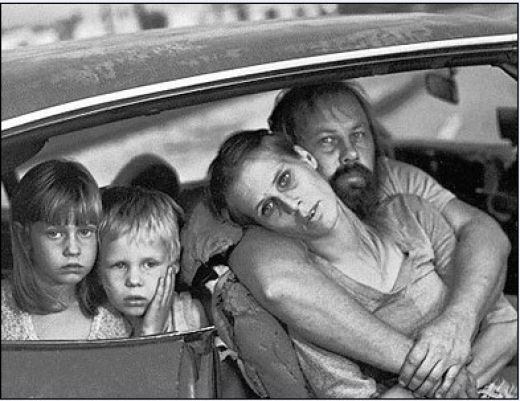 |
| I don't think these were the poor children Newt was talking about. |
Idea the Second -- Social Security:
- Allow younger Americans to opt in or out of Social Security as we know it.
- If they opt out, they can invest in a private account.
- They can choose only from a list of government-approved funds.
- If they still lose money by this method, the government guarantees to make up any shortfall.
- How the government will pay current benefits for current retirees (who rely on current payroll taxes for revenue) is not fully explained.
Here's a simpler idea: Let's let everybody invest all their Social Security payroll taxes in a government-approved list of, let's say, safe government bonds, which market forces set the rates for. Then, when they're ready for retirement, the government guarantees that each retiree gets a set amount for retirement based on how much they invested in these bonds. No risk, no moral hazard. Wait, isn't that a little bit like the way it works now? Doh!!
I admit that Newt's idea, though riskier and probably more expensive, is better because he's an intellectual.
Idea the Third -- Medicare (on Hannity 11/30/2011):
Nevertheless, Gingrich went on to distance himself again from the Ryan plan, which was passed by the House in April and has become attack-ad fodder for Democrats ever since.
That plan would change Medicare from the federal entitlement it has been for decades to a voucher program: Seniors who join Medicare in 2022 and beyond would receive subsidies to help pay for private insurance they would buy.
“I would approach Medicare differently,” Gingrich told Hannity. “I would actually offer his Medicare choice next year, but I would offer it as a choice that people could take if they thought it was better for them, not as an imposition.”
So then why did Gingrich so vehemently recant his original statement?
“I was trying to say something very profound,” he said, “and I frankly backed off because there was too much noise to communicate it.”Let me get this straight. Gingrich is prepared to say something profound as long as people aren't too noisy. Hmm.
As for his Medicare idea, we're back to some unavoidable questions: Which plan is better? I think that's not a hard thing to decide. If the current plan costs x dollars and provides x amount of services, and the Ryan plan costs x dollars and provides x amount of services (and these figures had better be able to be determined, or why would we make a change??), we should be able to decide which plan is best for seniors. We shouldn't ask seniors to decide if we couldn't tell them point-blank which plan is the best and accompany that with clear, reliable explanations. We could, of course, explain that we're not sure one plan is better than the other, so they should buck up and roll the dice. Hint: the Ryan Plan (which Gingrich wants to offer as a choice) offers less healthcare for more money, a larger portion of which seniors will have to pay. So, what do we tell seniors, Newt? Your idea is fresh?
 |
| I was dealt a winning hand. Thanks, Newt! |
Have I thought this through, or am I just not the intellectual that Newt is?
That's enough for now. My head hurts. Maybe more later.
Thursday, December 1, 2011
A Scandal Too Far
 |
| Hank Paulson |
The figures are flabbergasting. I'm speechless because I don't know where to go with this. Wait, yes, I do. It's criminal. I can't immediately point to the laws involved, but, okay, I've had stock in all the banks in question, and, to put it bluntly, MOST OF THAT STOCK IS CURRENTLY WORTHLESS. Some law must have been broken. But I'm not sure the Justice Dept. cares. Wait again. I'm sure they don't care because it was the Treasury Dept. and the Fed that were responsible for the funny paper. Eek. Eric going after Timmeh. I don't think so.
 |
| Robert Rubin |
 | |||
| LLoyd Blankfein |
Women's Reproductive Rights Are Human Rights
There likely has been no more divisive issue in American politics in the past half-century than abortion. Both sides have demonized each other for nearly as long as there has been a debate about the subject, and Roe v. Wade cleaved a divide between citizens in this country the likes we haven't seen since the civil rights movement of the 50s and 60s.
While I believe that there are many similarities between racism and the denial of a woman's right to choose -- in that both are about controlling or keeping down a specific population within the wider American population -- there is one substantial difference: racism has no moral, ethical, legal, or other basis, period. It is wrong, and more than that, it is as self-defeating and non-productive as any knuckleheaded idea can be, where as a woman's right to choose what she does with her body is an issue with valid moral arguments on both sides. This is not a simple matter, and regardless which side you fall on, the other side's concerns can not be easily dismissed.
Having just said that, I'm going to draw a line that simplifies the issue, for me at least. When you take religion out of the equation -- as we are obliged to do under our constitution -- the matter becomes clearer but not utterly solved. If Christians want to declare, as they already have, that God considers abortion murder, well then, fine, it's murder for you Christians. I'm sorry to hear that, but that's for Christian women to choose. But as an American citizen in the 21st century, it's not my problem. Since I don't believe in God, I'm not obliged to consider His opinion, and, by the way, neither are the courts, the legislature, or the executive branch of this country.
Before going on further with the moral arguments in the matter, let me draw another, and final, line on the issue. We have no right, as individuals or as a society, to tell a woman what she has to do with her body, including what to do with the reproductive process she's been assigned by birth. It's her call.
Now, that's the heart of the issue for Christians: who controls a woman's body. Not only do they make the case for abortion as murder, they make the case that the Bible tells a woman to be subservient to her husband. I believe that, more than the moral component, men want to dominate women and believe it's been ordained by God to be their right. Sorry, guys, but that's hooey. The Christian fairy tale of male dominance is more than superstition, it's caveman values: me BIG, me reproduce with you!
I can't find a logical place to draw the line when it comes to women's rights. Is it fine to allow women to control every function of their lives except reproduction? (As if it's anyone's place to "allow" women anything, except themselves.) No, women's rights include reproductive rights because the ramifications are so huge. If I buy a car, I can use it up, or I can sell it and get another one. If a woman has a baby, it's pretty much for life.
This is the part I hate -- and I think most men hate -- the idea that it's not our decision. If I impregnate a woman, in a real sense it's also my child. True. But her body is not my body, and I can't tell her what to do with it. Her womb in not my child-making factory, it's hers. She runs it, she decides the production schedule. I might not like that -- and it is a major heartache, to be sure -- but that's too bad. I don't get it both ways: I don't get to run my heart and hers. Just mine.
I view this personally because I see this as a personal struggle. It's personal for me, as a man who has some say in the matter. It's personal for the woman, as it's her body. Ideally -- and I know from experience -- a couple looks at the situation and makes a decision together that both can live with. Barring that, the woman has the final say.
Let's look at the "murder" angle. First, some statistics:
Americans, who respect the individual freedoms accorded to us by our citizenship and our constitution, would grant that, beyond the randomness of life, it's women's business.
And part of women's business are her birth-control choices. Any healthy way a woman can use to choose the time and place for her to enter motherhood are hers to decide, along with a partner who's a willing participant in that process. Of course, men have choices, too, such as using a condom or avoiding sex. Someday, there will be pharmaceutical choices for men, and then they'll be front and center in these decisions, too. All of these choices should be supported by any healthcare plan, whether public or private.
Not all of this is happy talk. It's deep, complicated, and often painful, requiring a lot of soul-searching on the part of both partners in these matters. It can be happy if a decision is made to have a baby, and it's successful. It can be neutral if a decision is wisely made that now is not the right time. It can be sad if the decision is a hard or divisive one.
I should know. I had to decide with a woman once long ago to abort a fetus. It's complicated, but let's just say that the doctor, who was Catholic and anti-abortion, actually recommended it because the chance that the baby could be carried to term was slim to none, and even it it was, the results were very likely to be tragic. We made the decision to abort. I for one was glad we had that right, even though it was with great sadness that the right was invoked. To this day, it's a heartache, one that awakens from time to time.
In the best cases, the decision can be made, as it was that time, together. Nevertheless, the woman holds sway here, and for good reason: it's her body, no one else's.
I'm stating my belief here, but let's be clear: my belief in a woman's right to choose is not the foundation of this right. This right is possessed a priori by all women before I even open my mouth.
A final thought: I remember going back to the deep South about 25 years ago, a region I hadn't seen since my childhood, when I spent a few years in Georgia. In this case it was Mobile, Alabama, and as I drove around I could see from the black sections of town and the rednecks riding around with confederate flags on the bumpers of their pick-up trucks that things hadn't changed as much as I had imagined. My girlfriend, who was from Mobile and was the reason we were visiting there, said to me, "Yep, not much has changed. And it's stupid, too, because the blacks are such a wasted resource." She went on to say, "Imagine the energy it takes to keep 40% of the population down and the lost value that population could have provided. Dumb, dumb, dumb."
She was so right. Men should welcome women getting everything they deserve. Men win when women are as free and as valued as men. Beyond the logic, the morality, and the ethics, equality is a big winner for everyone involved.
Women's reproductive rights are a core piece of the human rights continuum, one that men and women must fight for and cherish.
While I believe that there are many similarities between racism and the denial of a woman's right to choose -- in that both are about controlling or keeping down a specific population within the wider American population -- there is one substantial difference: racism has no moral, ethical, legal, or other basis, period. It is wrong, and more than that, it is as self-defeating and non-productive as any knuckleheaded idea can be, where as a woman's right to choose what she does with her body is an issue with valid moral arguments on both sides. This is not a simple matter, and regardless which side you fall on, the other side's concerns can not be easily dismissed.
Having just said that, I'm going to draw a line that simplifies the issue, for me at least. When you take religion out of the equation -- as we are obliged to do under our constitution -- the matter becomes clearer but not utterly solved. If Christians want to declare, as they already have, that God considers abortion murder, well then, fine, it's murder for you Christians. I'm sorry to hear that, but that's for Christian women to choose. But as an American citizen in the 21st century, it's not my problem. Since I don't believe in God, I'm not obliged to consider His opinion, and, by the way, neither are the courts, the legislature, or the executive branch of this country.
Before going on further with the moral arguments in the matter, let me draw another, and final, line on the issue. We have no right, as individuals or as a society, to tell a woman what she has to do with her body, including what to do with the reproductive process she's been assigned by birth. It's her call.
Now, that's the heart of the issue for Christians: who controls a woman's body. Not only do they make the case for abortion as murder, they make the case that the Bible tells a woman to be subservient to her husband. I believe that, more than the moral component, men want to dominate women and believe it's been ordained by God to be their right. Sorry, guys, but that's hooey. The Christian fairy tale of male dominance is more than superstition, it's caveman values: me BIG, me reproduce with you!
I can't find a logical place to draw the line when it comes to women's rights. Is it fine to allow women to control every function of their lives except reproduction? (As if it's anyone's place to "allow" women anything, except themselves.) No, women's rights include reproductive rights because the ramifications are so huge. If I buy a car, I can use it up, or I can sell it and get another one. If a woman has a baby, it's pretty much for life.
This is the part I hate -- and I think most men hate -- the idea that it's not our decision. If I impregnate a woman, in a real sense it's also my child. True. But her body is not my body, and I can't tell her what to do with it. Her womb in not my child-making factory, it's hers. She runs it, she decides the production schedule. I might not like that -- and it is a major heartache, to be sure -- but that's too bad. I don't get it both ways: I don't get to run my heart and hers. Just mine.
I view this personally because I see this as a personal struggle. It's personal for me, as a man who has some say in the matter. It's personal for the woman, as it's her body. Ideally -- and I know from experience -- a couple looks at the situation and makes a decision together that both can live with. Barring that, the woman has the final say.
Let's look at the "murder" angle. First, some statistics:
- 15-20% of all known pregnancies end in miscarriages. Another accepted term for this is "spontaneous abortion."
- An estimated half of all fertilized eggs spontaneously abort.
- The process of in vitro fertization -- in which eggs are fertilized outside the body and then placed in a woman's uterus, where it is hoped the pregnancy is carried to term -- has a success rate lower that 50%. As an example, the rate is 35% in Canada. Age affects the success rate with younger women more successful (42%) and older women less so (22%). Therefore, beyond the embryos that are discarded and never used, the vast majority of in vitro fertilized eggs don't make it.
Americans, who respect the individual freedoms accorded to us by our citizenship and our constitution, would grant that, beyond the randomness of life, it's women's business.
And part of women's business are her birth-control choices. Any healthy way a woman can use to choose the time and place for her to enter motherhood are hers to decide, along with a partner who's a willing participant in that process. Of course, men have choices, too, such as using a condom or avoiding sex. Someday, there will be pharmaceutical choices for men, and then they'll be front and center in these decisions, too. All of these choices should be supported by any healthcare plan, whether public or private.
Not all of this is happy talk. It's deep, complicated, and often painful, requiring a lot of soul-searching on the part of both partners in these matters. It can be happy if a decision is made to have a baby, and it's successful. It can be neutral if a decision is wisely made that now is not the right time. It can be sad if the decision is a hard or divisive one.
I should know. I had to decide with a woman once long ago to abort a fetus. It's complicated, but let's just say that the doctor, who was Catholic and anti-abortion, actually recommended it because the chance that the baby could be carried to term was slim to none, and even it it was, the results were very likely to be tragic. We made the decision to abort. I for one was glad we had that right, even though it was with great sadness that the right was invoked. To this day, it's a heartache, one that awakens from time to time.
In the best cases, the decision can be made, as it was that time, together. Nevertheless, the woman holds sway here, and for good reason: it's her body, no one else's.
I'm stating my belief here, but let's be clear: my belief in a woman's right to choose is not the foundation of this right. This right is possessed a priori by all women before I even open my mouth.
A final thought: I remember going back to the deep South about 25 years ago, a region I hadn't seen since my childhood, when I spent a few years in Georgia. In this case it was Mobile, Alabama, and as I drove around I could see from the black sections of town and the rednecks riding around with confederate flags on the bumpers of their pick-up trucks that things hadn't changed as much as I had imagined. My girlfriend, who was from Mobile and was the reason we were visiting there, said to me, "Yep, not much has changed. And it's stupid, too, because the blacks are such a wasted resource." She went on to say, "Imagine the energy it takes to keep 40% of the population down and the lost value that population could have provided. Dumb, dumb, dumb."
She was so right. Men should welcome women getting everything they deserve. Men win when women are as free and as valued as men. Beyond the logic, the morality, and the ethics, equality is a big winner for everyone involved.
Women's reproductive rights are a core piece of the human rights continuum, one that men and women must fight for and cherish.
Subscribe to:
Posts (Atom)