Friday, February 6, 2015

Journalism: Observation Versus Persuasion

Too much information, so little time, plus minds already made up. I'm screwed.

A couple of close friends of mine believe I'm ineffective in my ability to persuade, that if I were less strident, less shrill, if you will, perhaps less angry, I'd be more persuasive. Instead, I suppose, I'm annoying.

I don't doubt that, though I know from some who read my blog that they feel I'm rigorous in my exposition and demonstrate that I've really looked into the subject I'm writing about and have a right to make the cases I put forth. My problem is that I feel, and articulate, an unmistakeable contempt for people with opposing views.

It's true. It's not so much that I think they're fucking idiots, it's that I don't believe they believe what they're saying is true. I take this view, not instinctively, but because I can't find any valid arguments that underpin their views.

So I end up, when evaluating politicians' positions on the stupid-or-evil scale, deciding that they're evil. Not EVIL, just disinclined to take into account the well-being of others. I find it preposterous, for example, that anyone with half a mind thinks that Republicans in power these days in Washington are the least bit interested in doing good. Rather, they're dedicated to stopping Obama from getting any credit for doing good. The outcome, then, is fuck the nation.

Where am I wrong? Sure, I've just insulted many if not all of the supporters of the GOP/conservative political philosophy, but there you are. I'm not here to persuade, it's that simple. I'm here to make observations and support those observations with information.

It's really hard to be persuasive in the world of politics. I've had quite a bit of success in non-political decision-making, in teacher staff meetings when I was a teacher, in representing bands I've played in (persuading people that I/we deserve to be heard and paid for it), and on several boards on which I've served. And, yes, I've observed that I'm nicer, smoother, more thoughtful when I'm making my case in these venues.

But then my head explodes when a op-ed columnist like David Brooks writes pieces that are nice, smooth, and thoughtful, even though the slightest parsing exposes that his premises are full of shit, straw men, or sophist to the max. But he's nice!

As an aside, I might mention that in my liberal circle many of my friends think of David Brooks as the "good" conservative, the one they read to get a sense of conservatism's take on issues. All I can say is good grief! You swallowed the wrong pill or something.

So they're annoyed with my opinion of David Brooks, which is based on the notion that Mitch McConnell is an obvious prick, and though a dangerous politician, nobody mistakes him for a nice guy with nice ideas. David Brooks is much more dangerous. Just think of his soapbox on the PBS News Hour. Viewers watch him and think, "He's nice." Okay, he's nice. But his position on issues is remarkably flimsy at best. Is he, uh, persuasive? Maybe. I hope not.

So there it is: I've made my case, ironically, against trying to be persuasive. I'd have to be nice, and I don't for a minute think that's a valuable trait in the gang warfare that is politics and political thought.

What's worse -- considering the wealth of information at our fingertips in the Information Age -- is that facts aren't as persuasive as they once were, or at least as persuasive as I'd hoped they'd be. I was once in a discussion on Google+ with a pro-gun man and was making the case that guns don't make you safe. He didn't say, "Where are your facts? Prove it!" He said, "Give me the links to your facts so I can refute them." I ended the discussion on the spot.

Recently I got into a discussion with a good friend -- by all accounts a liberal, counter-cultural citizen -- about the dangers of guns. I made the case why guns made America less safe and that we paid a very high price for our gun culture in blood and treasure. He replied that he had no fear of guns being dangerous to him.

It didn't matter the statistics I offered showing the harm guns did across the land. He simply repeated over and over again that guns had no importance to his life, that they were no threat to him personally at all.

Of course, we were both right. Guns make America a more dangerous place than they do, say, in Japan, Australia, and the UK, where they have strict gun laws. And I'm persuaded my friend believes that guns aren't a threat to him in particular. Both of us are likely right. I only wish we hadn't been talking past each other.

I do worry, though, that I might be annoying. I hate annoying people.
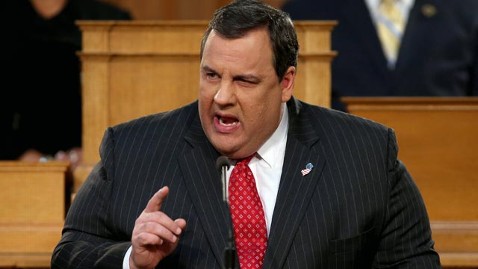
Chris Christie was elected governor twice while yelling "What are
you, stupid!?" to as many people as possible. Why can't I do that?

A final thought: A friend of mine wrote me in an email that he was oddly moved by the death of Mario Cuomo, most especially because of the power of his keynote speech at the 1984 Democratic Convention. I do wish I could deliver such a speech. Now that was persuasive. Still, Reagan was reelected in 1984 and his vice-president was elected in 1988, when Cuomo could not persuade himself to run. Oh well.

Wednesday, February 4, 2015

Governments Sometimes Need to Make Selfishness Illegal


The vaccine came too late for this victim, kept alive in an "iron lung."

The world has eliminated polio, a horrific disease, by near-universal vaccination. A case pops up here and there, but not in the United States. We've completely wiped out small pox, a disease I was immunized against as a child, as I was against polio.

Now, imagine if today's anti-vaxxer craze was as rampant during the wars against polio and small pox. Would we have fashioned such a success against those two viral monsters? Probably not. Ryan Cooper of The Week was right to blame selfishness for Chris Christie's pandering about parental choice in the current measles controversy.

What's changed since the days of polio and small pox is an increase in selfishness and a decrease in our sense of community, along with our trust in institutions. It's this drift away from an understanding of the "common good" that is so detrimental to our common well-being.

The best example of this growing failure was a comment I found on an article about Obamacare. It went something like this: "So I'm supposed to pay for the healthcare of my grossly obese next-door neighbor? I don't think so."

That sentiment is wrong on so many levels that it bears analysis.
  • It's true we're, in a sense, "paying" for someone else's healthcare, and if you want to feel that your obese neighbor is getting over on you, fine, go ahead. But the effort to provide more healthcare to marginal members of our society makes us all healthier, in very much the same way that broad participation in vaccines do. A healthier society is more productive -- leading to a higher standard of living -- and, more importantly, provides an environment in which your potential for catching disease decreases. And that's a good thing.
  • Even more obvious -- or it should be -- is that by mandating that everyone purchase comprehensive health insurance, the risk pool grows and costs are driven down, yes, on your policy, as well. Allowing crap policies or allowing insurance companies to only cover the people they want to cover shrinks the risk pool, driving up your policy costs. Yes, expanding the risk pool to include the unhealthy drives premiums up, but that's why we need everyone in the pool, to drive them back down again. Together we live long and prosper.
  • This may not be the most efficient way to lower costs, as many of us well know. European and Canadian models do a better job of both providing healthcare and keeping costs down. But Obamacare is the best we could do without dismantling the insurance system. Single payer systems are much better, but...
There are many more examples of how our selfish tendencies are deeply counterproductive and why governments actually have an obligation to rein in self-destructive tendencies. Here's a list of things we as Americans accept almost without question:
  • Texting while driving causes accidents, so we ban texting while driving, just as we do with drinking.
  • Running stop signs and red lights cause accidents and ruin traffic flow. We accept them because they work. And, yes, it's a government mandate, just like Obamacare.
  • We don't dismantle our fire departments in favor of a private-sector solution. We understand that we need rapid-response fire services that only governments can provide. Why shouldn't that logic apply to healthcare services?
  • We have banned smoking in public places like restaurants, bars, hospitals, stores, etc. Does anyone think life was better when we had a choice to light up?
  • We set rules for food-production sanitation and enforce them through inspection (though that's been undercut lately). Does this violate your freedom to choose contaminated food?
  • We mandate seat belts and airbags in cars and enforce their use. Who in their right mind would want the freedom nowadays to be unbelted in cars without airbags? Some people do, though. When we hear of fatal accidents, we often hear that seat belts weren't in use.
A final frontier that we may not get to cross any time soon is strict gun control. We tolerate around 30,000 gun deaths a year and countless people wounded in order to be safe, although all the research shows that guns in the home -- or concealed-carried for that matter -- make us less safe. The freedom to be much less safe is, to me, the height of insanity.

I don't propose to eliminate all risk. People should be allowed to drive or fly even though some cars or planes crash from time to time. If people want to scale cliffs or hang-glide off mountains, fine. Some risks, like scuba diving, should be protected activities.

Guns are different, though. Guns are specifically designed to shoot people or animals. If you not hunting animals, then you have guns specifically to shoot people. Many societies around the world have figured out that zero guns can equal near-zero gun deaths. America, in its wisdom, prefers 30,000+ gun deaths a year. For the sake of freedom? Really?


Christie and Paul: Pander First, Think Later

Sorry boys, a pander too far?

Important fact: Both Chris Christie and Rand Paul had years earlier pandered to the anti-vaxxer crew. So it's not surprising that they, in the context of a presidential bid, pandered first and thought later.

It actually wasn't funny. Christie and Paul weighed it with tacit support for choice for parents to not vaccinate, this at the height of a raging measles epidemic that made their pandering all the more dangerous. Then they both tried to walk back their blunders. Rand Paul did so in the most blatant of ways.

See, I really like vaccinations. Forget my "profound mental disorders" comment.

Sorry, Rand, it doesn't work that way. You overshadowed Chris Christie's gaffe to the extent it appeared he'd get away with it, but, no, the nest was already stirred and in the worst way. The Washington Post editorial board brought the hammer down in an op-ed subtitled "Rand Paul and Chris Christie raise doubts about their fitness for higher office." Ouch.
TWO POTENTIAL Republican presidential candidates, Sen. Rand Paul (Ky.) and New Jersey Gov. Chris Christie, have made irresponsible comments about vaccines at a time when measles has reappeared in the United States. Their remarks call into question their judgment and their fitness for higher office.
WaPo itself panders to conservatives in very much the same way that "Meet the Press" has so many more GOPers on its show than Dems. This time, though, they ripped into two certified 2016 candidates. It wasn't pretty, and it shouldn't have been. As gaffes go, these may have legs.

The Week's Ryan Cooper added a special smackdown to Christie's personnel jacket, thought he tosses Rand Paul's chicanery in for good measure.

I doubt the pair will exit the GOP candidate clown car because of this one. And to the rest of the field's credit, they appear to have been wiser. Rubio, Jindal, Cruz, Carson, and others dodged this bullet with relatively unequivocal statements in favor of vaccinations and the science involved.

So, yes, Christie and Paul have some 'splainin' to do, and it might not be enough this time.


Tuesday, February 3, 2015

Add Vaccinations to GOP Science Denial

My oldest brother had measles as a toddler, rendering him profoundly deaf.

Right on cue, the members of the GOP clown car get to yapping about the measles epidemic. Chris Christie wants "choice" for parents. Rand Paul went further and stated that vaccinations can cause "profound mental disorders," though he later said that he thought they were a "good thing." Very coherent position, Rand, seeing as how you went to medical school.

Oddly, ordinarily bat-shit-crazy Dr. Ben Carson of Johns Hopkins was (almost) unequivocal in his urging that parents get their kids vaccinated, saying "Certain communicable diseases have been largely eradicated by immunization policies in this country and we should not allow those diseases to return by foregoing safe immunization programs, for philosophical, religious or other reasons when we have the means to eradicate them." He then went on to say he believed strongly in individual rights, telegraphing something or another. Which is it, Doc?

Hillary Clinton, the only potential Democratic candidate to weigh in, was direct, saying that "The science is clear: The earth is round, the sky is blue, and #vaccineswork. Let's protect all our kids. #GrandmothersKnowBest." No equivocation there.

Here's the deal: By and large, the GOP denies science when it conflicts with their base's views. Human-caused climate change? "I'm not a scientist." Creationism vs. evolution? "The debate hasn't been settled. Teach them both." Guns in the home are more likely to be used on residents that intruders? "The only thing that can stop a bad guy with..." Now it's tacit support for the anti-vaxxers. Why aren't we surprised?

This is perfect for the libertarian/conservative playbook. Why do we vaccinate? So we build herd immunity. Why should all Americans be mandated to buy health insurance? So that rates would drop for all, and all can be covered. Instead we get "No one can tell me what shots to give my children," and "Why should I pay for my chain-smoking, obese, diabetic neighbor's health insurance?"

I'd be remiss if I didn't point out that Marin County, a liberal hotbed north of San Francisco, is chock full of anti-vaxxers, much to the discredit of affluent, well-educated humans.

Let's let Sean Hannity have the last word in his own inimitable way:


Good Guy with a Gun? Possibly, but It Won't Make You Safer.


In fact, it's the opposite. It's also a well-established, undeniable fact. Read this Slate article for a window into the research.

Hannah Kelley, 20, daughter of a pastor, was accidentally shot dead in her
father's church. She's one of an average 600+ shot and killed accidentally each year.

More facts here and here.

Sunday, February 1, 2015

Markets Don't Fail. We Do, When We Abuse Them.


Joseph Stalin: I really don't think he was expressing a political philosophy, do you?

A market -- as we understand the term in a market economy -- is a neutral thing. It's used to sort out supply, demand, and price. It's not the same thing as capitalism.

Case in point: China has a command economy, not a market one. It nonetheless utilizes a kind of capitalist system, and some of its markets are reasonably unfettered, while its social systems are highly restricted. I know, it's a conundrum, but that's easily explained. Its communist model is a sham. As we've noticed throughout the 20th century, communist means totalitarian, nothing else. In fairness to Karl Marx, communism is a political theory. In practice, it's been used as an opportunity to oppress.

The reason the Chinese have relatively free access to markets is the result of a bargain, if you will, that Deng Xiaoping struck with the Chinese people in the post-Mao era: You can have access to markets and essential capitalism, but we continue to control society, absolutely.

As for capitalism in market economies, there are a variety of expressions of it historically. Having gone through the history museum in Copenhagen, Denmark, I know that the Danes, for example, very thoughtfully and with full consideration chose to build a state with labor very much on an equal footing with capital. The result is a capitalist system that supports labor rather than oppresses it.

There are many examples of capitalist systems around the world, some more socialist than others. Some work better than others. Japan -- where I lived for years -- is a very conservative, capitalist country with a highly developed socialist structure. Such systems can and do co-exist.

Oppression isn't the sole province of "communist" totalitarian states. A case could be made -- and I'd like to make it -- that capitalism in the U.S. has become an instrument of oppression.

Here enters the role of government in controlling, or regulating, markets. Capitalism run amok can only happen to the extent that markets are left unregulated. Also, how government chooses to tax -- and the subsequent distribution of that revenue -- plays a huge role in the expression of capitalism.

It comes down to this: We get the form of capitalism we deserve, based on the mix of regulation, taxation, and distribution. How we manage our social structures also plays a defining role.

The most extreme conservative/libertarian philosophies would, I think we could agree, lead to a Mad Max world. The most extreme "communist"/totalitarian philosophy would lead to what we've experienced in the Soviet Union, China, and North Korea. I suppose I could include Cuba in that, but I've always felt that our proximity to Cuba and our meddling in its affairs make it an odd case. Cuba, as a laboratory for communism, amounts to a tainted sample. It's an oppressive state with elements of "good" socialism, like its healthcare system.

So, what do you want, Mad Max or Stalin? It's how we choose to be somewhere in the middle that defines us. Since there's so much room in between the extremes, it's a worthy goal -- assuming we're completely honest in expressing the justifications for our policy positions -- to find a proper balance.

So, here's the question(s):
  • How do we want our markets to function?
  • How do we want our governments to function?
  • What kind of society do we want to produce as a result of how our markets and governments function in relation to each other?
How we answer these questions gets to the heart of it, doesn't it?

Now, let's elevate ourselves, for a minute, above politics. From that perspective, how would you design the best healthcare system for the United States?

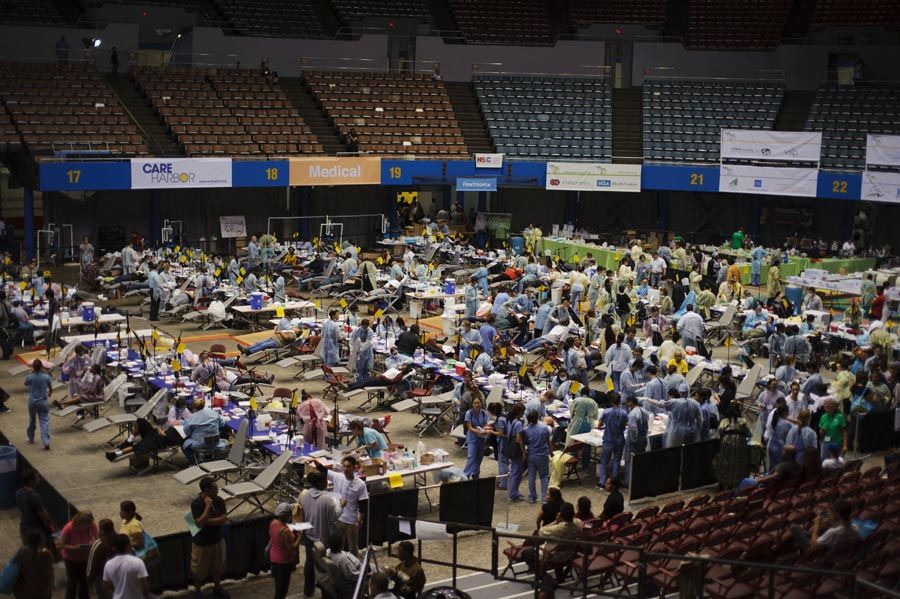
Would your healthcare system look like this? (Los Angeles Memorial Sports
Arena free healthcare clinic, 2012) Would you design this for the U.S.?


Thursday, January 29, 2015

Watching the End of Capitalism? Yes, If We Don't Address the Stupid


Oracle chairman Larry Ellison's 2004 yacht. David Geffen bought half of
it in 2006 and has owned it all since 2010. 11th largest in the world.
Rich people need shit like this to feel good.

When we talk about the end of capitalism (won't be that easy, but can you say "let them eat cake"?), we're wildly speculating. I don't know what oligarchies do to prevent the end of days, but I imagine those with scads of cash can buy armies. It won't be the first time.

The difference would be that America is heavily armed, and if the working stiffs figure out that the rich are keeping all the productivity gains of the past thirty years for themselves, someone might come gunning. So far, the working stiffs think raising taxes on the rich -- back to 1980 levels! -- is somehow an attack on their well-being. Oh well.

A good case in point is Yahoo Finance's article this morning entitled "Five years into recovery, Dow companies squeeze workers as investors thrive." Key chart:


The chart essentially says that corporations give their profits to investors, not workers. It wasn't always so, but with the near-death of unionism and the general idea that a rising tide (should) lift all boats. No, let them eat cake. We want all the boats, at least the gargantuan ones.

What are our policy choices? For the Democrats, it's nibble around the edges to get some relief for the poor, working class, and middle class. That's the gist of Barack Obama's new tax-and-redistribute plan. Not a bad plan, but a relatively feeble start. Here's Vox's take on what it is and its chances of enactment. (Hint: none.)

For the Republicans, whose likely presidential candidates have taken to running around yelling "Save the poor!", their policies remain unformed. They haven't figured out how to make their tax-cuts-for-the-rich mantra sound like "Yeah, but we're also saving the poor!" There's a huge conflict there.

We'll probably begin to hear the GOP spout some form of Paul Ryan's give-the-poor-money-but-make-them-report-in-every-other-day, which of course won't waste time and money on the incredible bureaucracy needed to verify that the poor aren't spending their food stamps on Cadillacs and cell phones. Didn't think it out, did you, Paul?
Ryan’s anti-poverty proposals share many of the assumptions and attitudes of  [Bush's "compassionate conservatism"] agenda from 15 years ago. They start from an assumption that poverty is an unusual and marginal issue in U.S. society. That idea is not articulated, but it is revealed by Ryan’s most attention-grabbing proposal: his “opportunity contract.” Ryan suggests that states experiment with a new approach to means-tested programs. Beneficiaries of those programs would be assigned a social-service provider. That provider—which might be a government agency, a nonprofit private-sector organization, or a for-profit business—would guide the recipient through the welter of government programs available. It would also set goals for the beneficiary, such as attending school or completing a drug-treatment program. The provider would reward good behavior and impose sanctions on bad behavior.
Guess you didn't, Paul. Yes, let's solve the poverty problem by appointing a life coach for each and every poor person. Makes sense to me! Of course, we'll have to end Social Security and Medicare as we know it to do it, but... At least corporate profits would be secure.

We'll see if a Ted Cruz or a Scott Walker or even a John Kasich can produce a better scheme to not appear to be looking cross-eyed at the unfortunate. Since the unfortunate appear to be the 99%, that's a tall order.

Scott Walker, 2016 hopeful. Yeah, destroying public-sector unions
is just the ticket to move money where it's needed.